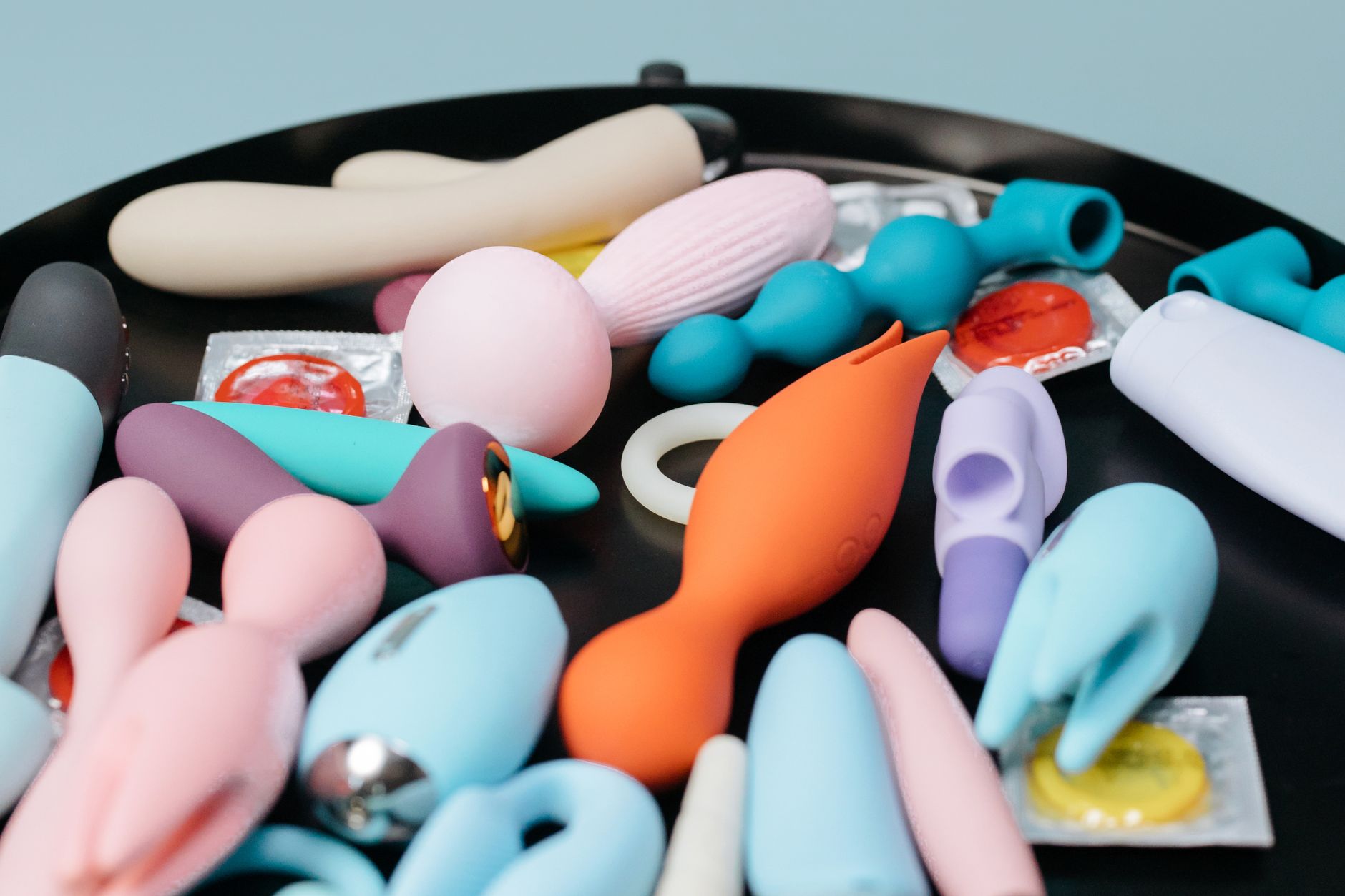
How Lemon Vibrators Work Differently on Vulvas With Low Estrogen
Estrogen shapes everything about clitoral response. When levels drop, your lemon vibrator experience shifts. Here's what changes, what stays the same, and why suction might feel like a whole new world.
Estrogen doesn't just regulate your period. It's orchestrating everything about how your clitoris responds to touch, pressure, and stimulation. When levels drop, the entire sensory map changes. Most people notice the shift feels smaller or duller. Fewer realize that lemon vibrators often feel radically different on low-estrogen bodies, and that difference is actually strategic information.
Here's what I see in my clinical practice: people who switch to lemon vibrators during perimenopause or postmenopause often find them more effective than traditional vibrators, even though the suction sensation initially feels strange. That's not coincidence. It's biology.
Estrogen keeps the vulva plump, well-oxygenated, and responsive. The clitoris has a visible glans (the head) and an internal structure that branches into two clitoral crura, or legs, running deeper into the body. Estrogen supports the collagen and elastin in this entire system. When estrogen drops, that support weakens.
Think of it like this. High-estrogen tissue is thick, vascular, and quick to swell with blood when stimulated. That swelling creates the nerve sensitivity that drives orgasm. Low-estrogen tissue is thinner, less vascular, and slower to engorge. The nerves are still there. They're just working through a thinner, less elastic tissue.
This is why the same vibrator that felt perfect at 30 can feel too abrasive at 55. Direct vibration requires sustained friction against delicate tissue. Lemon vibrators use suction, which works by a completely different mechanism.
Traditional vibrators create pleasure through oscillation, typically 10,000 to 20,000 Hz depending on the toy. That frequency is designed for thicker, more elastic tissue that can absorb the impact without fatigue.
Lemon suction toys work through negative pressure. They create a seal over the clitoral glans and draw it gently inward, stimulating the full clitoral structure, not just the surface. This matters hugely for low-estrogen vulvas because suction doesn't depend on tissue thickness. It doesn't require sustained friction. It works with the body's reduced vascularity instead of against it.
My clients often describe lemon vibrators as feeling "deeper" or "more concentrated" even though the device barely touches the surface. That's because suction engages the internal clitoral legs, which estrogen loss hasn't significantly altered. The nerve endings inside are still intact. Low-estrogen tissue just reveals that architecture more clearly.
Here's something most conversations skip over: arousal is blood flow. When estrogen drops, baseline blood flow to the vulva decreases, and the rate at which blood accumulates during stimulation slows down. This delays orgasm. Sometimes significantly.
Vibration alone can't overcome this bottleneck because it's trying to create sensation through friction on tissue that's already struggling to receive adequate blood supply. Suction, by contrast, actively pulls blood into the clitoral tissue. It's less passive. The device is literally helping your body concentrate blood where it needs to be.
This is why people with low estrogen often report longer warm-up times with traditional vibrators but shorter orgasm latency once they switch to lemon clitoral vibrators. The suction is doing some of the vascular work for you.
On low-estrogen vulvas, intensity doesn't always scale linearly. At settings 1 through 3, you might feel almost nothing. Then at 4, suddenly there's sensation. At 5 and 6, things intensify rapidly. This isn't the toy. It's tissue adaptation and the threshold effect of suction.
With traditional vibrators, the sensation tends to increase smoothly as you turn up the frequency. Each increment feels like a logical step. With lemon vibrators, suction has a tipping point. Below a certain pressure gradient, the seal isn't strong enough to create real stimulation. Once you cross that threshold, the sensation jumps.
My suggestion: start at pattern 2 and spend three to five minutes there. Let the tissue respond. Many people find their sweet spot is patterns 3 through 5, whereas someone with higher estrogen might enjoy 1 through 3. You're not broken. Your tissue is just responding to a different hormone profile.
Low estrogen usually means lower natural lubrication. People often assume this means lemon vibrators won't work well because suction requires a seal. Actually, the opposite is true. A light layer of water-based lubricant helps the seal form more efficiently. The toy glides over the tissue without dragging or creating friction that low-estrogen skin can't tolerate.
Use lubricant generously. Not because you're inadequate. Because your body has shifted, and lube is a strategic tool that makes suction work with your physiology instead of against it.
Silicone lubricants feel richer, but they degrade silicone toys over time. Stick to water-based options designed for sensitive skin. Hyaluronic acid lubes are particularly good for low-estrogen vulvas because they mimic natural lubrication more closely.
Many people with low estrogen pick up a lemon vibrator and use pattern 5 or 6 right away because they're chasing the intensity they remember from their twenties. Then they feel almost nothing and assume the toy isn't working.
This is a sequencing problem, not a device problem. Low-estrogen tissue has lower baseline nerve sensitivity. It needs a ramp-up period to "wake up." Start with patterns 1 and 2 for five to ten minutes, even though the sensation seems subtle. You're not numbing yourself. You're allowing your nervous system to calibrate.
After that warm-up, patterns 3 and 4 will feel dramatically different. Many people find their orgasm is more intense after this gradual approach than if they'd jumped straight to max intensity.
Traditional vibrators on high-estrogen bodies often deliver results in 5 to 10 minutes. With lemon vibrators on low-estrogen bodies, the timeline is closer to 15 to 25 minutes. This isn't a sign of dysfunction. It's vascular reality. Your tissues need time to accumulate the blood flow that will make the experience work.
Budget for this. Many people feel disappointed because they're unconsciously comparing their low-estrogen experience to how things used to feel. You're not the same body. You're a more efficient, more conscious body that just needs a different rhythm.
Estrogen supports pelvic floor muscle tone. As estrogen drops, the pelvic floor weakens. This affects not just strength but also flexibility. Many people find their pelvic floor tenses up during stimulation as a compensation mechanism, which actually blocks the sensation they're trying to create.
Before using a lemon vibrator, spend two minutes consciously relaxing your pelvic floor. Breathe into your belly. Imagine your pelvic floor softening downward, not gripping. This single shift often makes the difference between an okay experience and a transformative one.
Pelvic floor physical therapy is worth exploring if you find yourself unable to relax, especially if you're also experiencing pain or heaviness. A pelvic floor PT can assess whether low-estrogen changes are creating tension that affects sensation.
Here's the plot twist that nobody predicts: orgasms after switching to lemon vibrators during low-estrogen phases are often more localized and intense, even if they take longer to reach. This is partly because suction creates a more concentrated, focused stimulation pattern than broad vibration. It's partly because you're working with your body's current design instead of chasing a ghost of your younger physiology.
My clients frequently tell me their best orgasms happen in their fifties and sixties, often after they switch to lemon clitoral vibrators. Not because the toy is magic. Because they've finally stopped fighting their body's changes and started using tools designed for how they actually are right now.
If you're using topical or systemic hormone replacement, you might notice lemon vibrators feel different as your estrogen levels shift upward. More blood flow returns. Tissue thickens. You might find you want lower intensity settings because sensation becomes sharper.
This is expected. It's not a sign that the toy stopped working. It's feedback that your body is responding to the hormone change. You can adjust your approach: try different patterns, explore new timing, or cycle back to traditional vibrators if that feels right. The point is to stay curious about what your body wants right now, not to lock into one technique forever.
Your clitoral nerve density hasn't changed. The neural pathways that create pleasure are still intact. Your capacity for orgasm is unchanged. Low estrogen shapes tissue architecture and vascular response, not the fundamental wiring of pleasure in your brain and nervous system.
Many people approach low-estrogen bodies as broken versions of their former selves. They're not. They're different designs that actually respond beautifully to tools designed for their specific physiology. Lemon vibrators exist in that category.
Tissue responsiveness usually stabilizes within three to five uses. You'll notice the most dramatic difference in your second and third session once your nervous system has calibrated to the sensation and your tissue has had time to respond. If after five uses you're still not feeling anything, check your technique: make sure the seal is tight, you're using adequate lubricant, and you're giving yourself a full 15-minute warm-up before increasing intensity.
Absolutely. Lemon vibrators work across estrogen profiles because suction is a gentler, more versatile stimulation method than vibration. Even if low estrogen isn't your specific factor, you might find suction is just how your body prefers to be touched. The beauty of the Hello Nancy product line is you can experiment without pressure. If it doesn't work for you, the refund policy makes it risk-free.
No. Water-based lubricant and estrogen creams are compatible. If you're using prescription estrogen cream, apply it as directed and allow it to absorb fully before using a toy. The cream won't affect the toy's function, and the toy won't interact with the medication.
Most people do, but there's no universal rule. Start with your current favorite setting and notice how it feels. If sensitivity increases with HRT, you might prefer patterns 2 or 3 instead of 4. If you're cycling on and off HRT, just adjust as you go. Your body will tell you what it needs.
Consider three variables: warm-up time (aim for 20 minutes minimum), lubrication quality (switch to a hyaluronic acid or premium water-based brand), and seal integrity (try different angles or positions to find where the device sits most comfortably). If nothing shifts, the issue might not be the toy. Talk to your doctor or a pelvic health specialist about whether there's an underlying vascular or neurological factor worth exploring.
Lemon vibrators in general work beautifully for low-estrogen vulvas because the suction mechanism is inherently well-suited to thinner tissue and lower baseline vascularity. The Lem by Hello Nancy is the flagship lemon clitoral vibrator and works across all tissue types and estrogen profiles. If you're new to suction, starting with the Lem gives you the full range of patterns and power without unnecessary complexity.
Low estrogen is a pivot point, not an ending. Your clitoris isn't less capable. It's differently shaped. When you match your tool to your tissue, that difference becomes an advantage. Lemon vibrators aren't a workaround for a body that's failing. They're a recognition that pleasure adapts, and adaptation is strength.
If you're navigating this transition and want support thinking through what your body needs right now, that's what I'm here for. Reach out at hello nancy.com/contact and let's talk.
Baker, F. C., & Newton, R. P. (2011). Sleep and sex. Sleep Medicine Reviews, 15(1), 1-8. DOI: 10.1016/j.smrv.2010.06.003
Newport, D. J., et al. (2002). Vaginal allopregnanolone levels are associated with mood in perimenopause and depression. Clinical Neuroscience Research, 2(3-4), 161-171. DOI: 10.1016/S1566-2772(02)00010-1
Stewart, E. A., et al. (2016). The aging female reproductive system: A clinical perspective. Journal of Clinical Endocrinology & Metabolism, 101(3), 861-874. DOI: 10.1210/jc.2015-3470
Ismail, R., et al. (2020). Genitourinary syndrome of menopause: Modern management of menopausal sexual dysfunction. Clinical Obstetrics and Gynecology, 63(4), 684-696. DOI: 10.1097/GRF.0000000000000565