The most common pleasure gap nobody talks about
You're in bed. One partner is ready in five minutes. The other needs thirty. So what happens. Either the fast partner waits (and resents), or the slow partner feels rushed (and checks out). Neither of you gets what you actually want, and both of you feel wrong for your own bodies. That's the pleasure timeline mismatch, and it's way more common than couples realize.
The good news: a lemon vibrator isn't just a tool for solo pleasure. It's a bridge.
Why mismatched timelines happen (and why it's not a sign of incompatibility)
First, the physiology. Arousal speed is determined by nervous system sensitivity, hormones, genital blood flow, and how your brain responds to stimulation. These are not things you choose. One partner might have a sympathetic nervous system that fires fast. The other might need longer parasympathetic activation to feel safe enough to let go.
Then there's the psychological layer. If you've been conditioned to rush through sex, or to prioritize your partner's pleasure over your own arousal, your body learns to skip steps. If you've experienced pressure or shame around your sexuality, your nervous system might need more time to downshift into pleasure mode.
Honestly though? The biggest reason couples struggle with timeline mismatches is that they're treating it like a problem to solve rather than a rhythm to understand.
How most couples handle this (and why it backfires)
The usual arc goes like this: slower partner starts taking longer, faster partner worries it's about them, slower partner feels ashamed of their body, they stop trying, sex becomes less frequent, resentment builds. Then one of two things happens. Either they give up on synchronized pleasure entirely, or one partner white-knuckles their way through a fake orgasm so the other doesn't feel bad.
I've worked with hundreds of couples in this exact spot. The real problem isn't that your timelines don't match. It's that you're still trying to reach orgasm at the same time, as though that's the actual goal.
It's not.
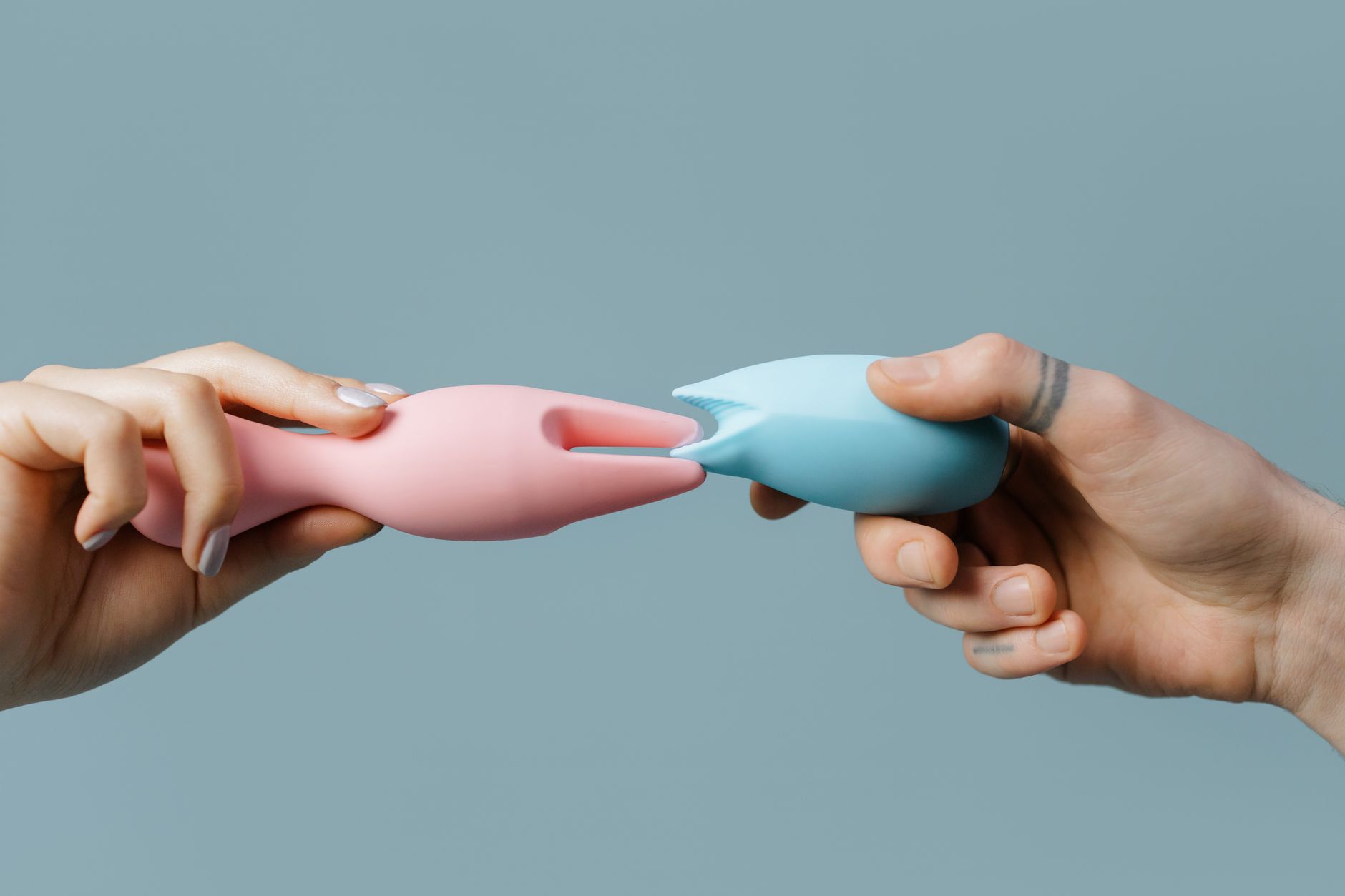
Photo by cottonbro studio on Pexels
The shift that changes everything
Stop thinking about sex as a race with a finish line. Start thinking about it as a duet where you're in different movements at the same time.
Here's what this looks like: one partner is aroused and ready. The other isn't there yet. Instead of waiting in silence or rushing, the ready partner gets clitoral stimulation. The slower partner continues doing what builds their arousal (maybe it's kissing, penetration, mental focus, or just more time). Both are engaged, both are getting what they need, and there's no performance pressure.
A lemon vibrator makes this actually work because the person using it is taking care of their own pleasure. They're not waiting for their partner to catch up. They're not depending on a partner to provide the exact pressure and rhythm their body needs. And their partner isn't resenting them for taking "too long."
This reframe is huge.
How lemon sexual toys fit into mismatched timelines
Lemon clitoral vibrators use suction and pulsation, not friction. This matters for timeline work because suction creates an incredibly efficient path to arousal. It doesn't require the same warm-up that manual stimulation does. It doesn't fatigue like fingers do. And it doesn't require negotiation about pressure or speed.
Here's the practical application: let's say one partner reaches arousal in five minutes, the other in twenty. Rather than the fast partner going soft while they wait, they use a lemon vibrator for those fifteen minutes. They're not penetrating anyone. They're not taking from the slower partner's attention. They're just... getting what they need.
Meanwhile, the slower partner can focus on what actually builds their arousal without the pressure of keeping someone else engaged. That might be deeper kissing, breast play, mental focus, or just the knowledge that they have time. No rushing. No shame.
When the slower partner gets close, the penetration or partner stimulation can start. By then, both partners are genuinely aroused instead of one partner faking it and the other resentful.
The communication piece (which matters more than the toy)
None of this works without talking about it first. And I mean actually talking, not just mentioning it once and hoping your partner gets it.
Here's the conversation: "I've noticed our bodies have different arousal speeds, and I don't think that's a problem. I want to try something that gives us both what we need without anyone feeling rushed or left behind. I'm thinking I could use a lemon vibrator sometimes so I'm genuinely ready when you are, and you don't have to rush."
That's it. You're not saying anything is wrong with them. You're not saying they're too slow. You're saying you want to take ownership of your own arousal instead of making it your partner's job.
The slower partner often feels massive relief. They're not being judged. They're not broken. They're just different, and that difference is workable.
Why air-suction technology specifically helps with timeline problems
Air-suction lemon vibrators (like the Lemon Clitoral Vibrator) work fast because they stimulate a wider nerve cluster at once. You're not trying to find the exact right spot and pressure like you would with a traditional vibrator or wand. The suction creates stimulation across the entire clitoral area.
For the faster-aroused partner, this means they can get what they need in less total time, reducing the gap between timelines. They're not waiting as long, and the slower partner isn't under as much pressure to perform.
For the slower partner, knowing their partner has a tool that works efficiently takes the pressure off entirely. They don't feel like they're holding anyone back. They can take however long they actually need.
Building a sustainable rhythm together
Once you've had the conversation and done this a few times, patterns start to emerge. Maybe you realize you need thirty minutes of foreplay before you're genuinely aroused. Maybe your partner realizes they actually perform better without any pressure to take forever. Maybe you discover you both like using a lemon vibrator together, passing it back and forth, taking turns.
The point is you're working with your actual bodies instead of pretending you're something you're not.
From a relationship perspective, this is profound. Because you're not just solving a sex problem. You're practicing something much bigger: how to honor your own needs while also honoring your partner's. How to communicate directly about desire. How to take responsibility for your own pleasure.
Those skills transfer everywhere else in the relationship.
What changes once you stop fighting your timelines
Couples who work through timeline mismatches usually report three things. First, they have sex more often because there's no dread or resentment attached. Second, both partners actually enjoy it because they're not performing. Third, they feel closer because they're being honest about what they need instead of pretending.
The physical pleasure matters. But the emotional piece is what makes it stick.
If you want to explore how to introduce pleasure devices into your intimate life without shame, there's a whole conversation framework for that. And if you're dealing with something more specific like partners with different sensitivity levels, the settings and approaches shift a little.
But the foundation is always the same: stop making one person's timeline wrong. They're just different. And different is actually workable.
Frequently asked questions
What if my partner feels insecure when I use a vibrator during sex?
This is the most common concern I hear. The insecurity usually comes from an old story about vibrators meaning they're "not enough." That's completely understandable and also not true. Bring it back to the actual timeline problem: "A vibrator lets me take care of my own arousal so you don't have to wait or rush. It's not about you. It's about both of us getting what we need."
If the insecurity persists, use the vibrator together first. Let them see how it works. Let them use it on you. Watching your partner actually enjoy it usually dissolves the threat pretty fast.
If we use a lemon vibrator, will my partner get desensitized?
No. Desensitization happens from solo overuse over months or years, not from couples play. And if your partner is using a lemon vibrator during partnered sex, they're getting multiple sources of stimulation at once (the vibrator plus you plus the psychological connection). That's not repetitive in a way that causes problems.
How much faster will my partner climax if they use a vibrator?
It depends on their starting point. Some partners go from thirty minutes to fifteen. Others go from twenty to ten. Some only save five minutes. The real benefit isn't the time saved. It's the shift in psychology. You're both trying to meet in the middle instead of one person waiting and resenting.
Should we be using the same lemon vibrator or different ones?
I recommend different ones if you're both using vibrators regularly. Not because it's more "pure," but because different bodies have different ideal settings and patterns. One partner might prefer lower intensity, the other higher. You'll both feel more freedom to find what actually works for you.
What if we're still out of sync even after trying this?
Then there might be something else happening. Medication side effects, unresolved anxiety, lack of emotional intimacy, or a nervous system that's genuinely dysregulated. Those are all worth addressing separately, ideally with a therapist. A vibrator can't fix everything. But it can remove one layer of friction while you figure out what's actually underneath.
Is using a vibrator together something we need to ease into?
Not necessarily, but it helps. Start with a conversation. Then maybe start with solo exploration so you each know what the device feels like. Then try it together in a low-pressure moment. But honestly, some couples just say "let's try it" and it works fine from the start. You know your relationship better than anyone else does.
The bigger picture
Mismatched pleasure timelines aren't a relationship failure. They're actually an invitation. An invitation to stop pretending your arousal timelines are the same when they're clearly not. An invitation to be honest about what you need instead of what you think you should need. And an invitation to build something more resilient together.
Lemon vibrators and other clitoral vibrators are tools for that conversation. They're not magic. They're just efficient and honest, which is exactly what mismatched couples need.
If you want to dig deeper into how to use pleasure devices in your relationship without the shame or performance pressure, start with the basics: talk to your partner. Tell them what you actually need. Listen to what they need. Then figure out how to meet in the middle.
That's where real connection starts.