
Let's name what's actually happening
Time apart doesn't kill desire. It kills momentum. Your body forgets the rhythm, your mind gets stuck in caretaker mode, and by the time you're physically together again, you're both waiting for the other person to make the first move. Meanwhile, nothing happens.
This isn't a failure. It's what happens to every couple when life gets in the way.
Why the awkwardness feels so real
When you've been disconnected from your partner's body for weeks or months, the reconnection doesn't happen on command. Your nervous system has adjusted to the absence. Touch feels unfamiliar. You might feel self-conscious in a way you didn't before. Your partner might too.
Here's the thing nobody talks about: this awkwardness is actually a useful signal. It means you're not in your normal groove. You're in a different state, and trying to jump straight back into your old rhythm rarely works.
That's where lemon vibrators come in, not as a substitute for your partner, but as a permission slip. They give both of you a way to restart without the pressure of performing the familiar dance perfectly.
The three blocks that show up
Block one: Your body feels like a stranger to you. After time apart, you've likely lost touch with what feels good. You might have stopped touching yourself entirely. Your nervous system has downregulated. A lemon vibrator lets you reconnect with your own sensation without waiting for your partner to do the reintroduction.
Block two: Your partner is watching. And you know they're watching. Even if they're being patient and kind, you feel exposed in a new way. Using a lemon vibrator together makes that exposure deliberate rather than accidental. You're both choosing it, which changes the dynamic completely.
Block three: You don't know how to ask for what you need. After time apart, the vulnerability of saying "I need this" or "can we take this slower" often feels harder than just staying quiet. A vibrator becomes a language you can both understand without as many words.
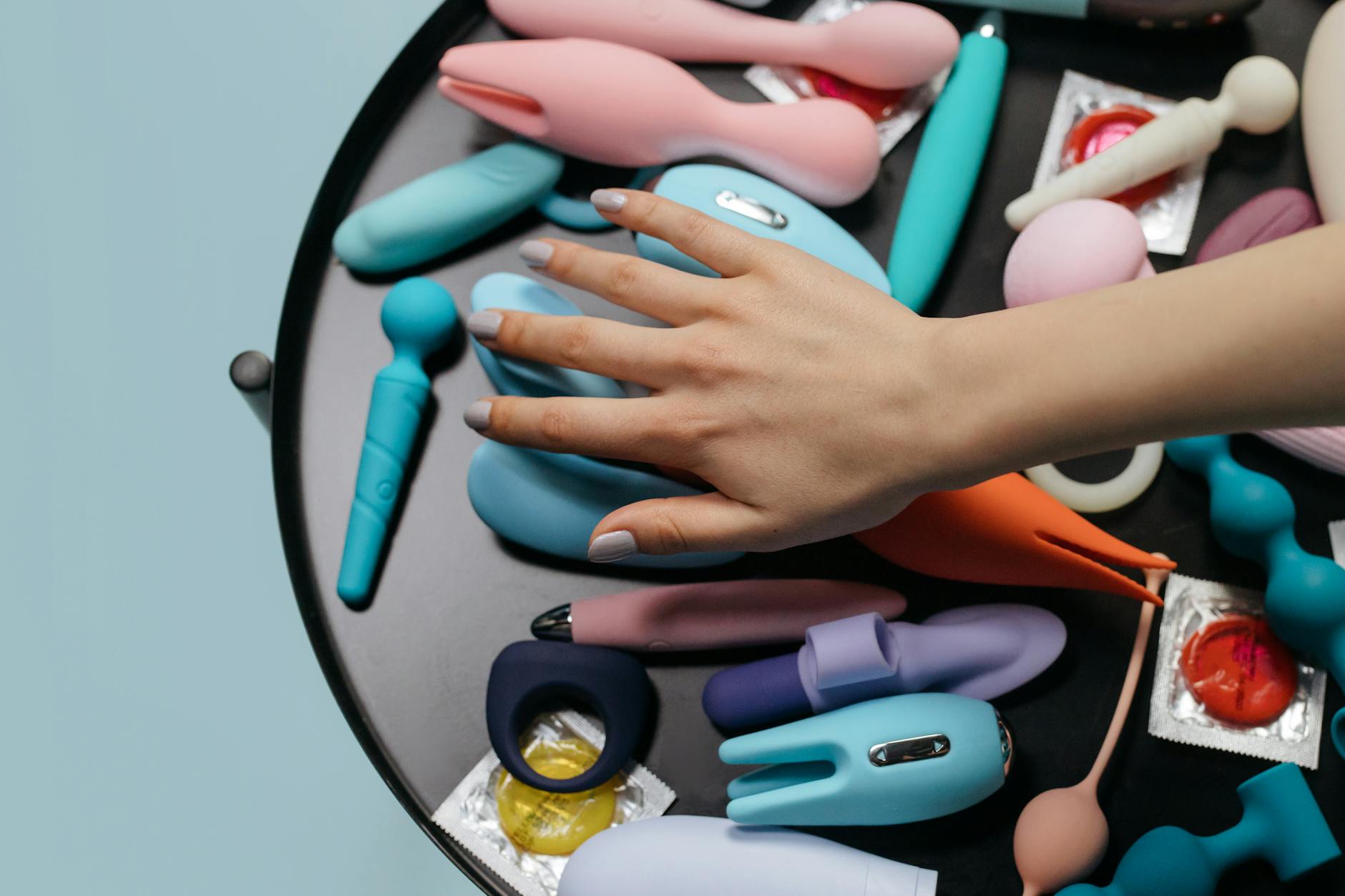
Photo by cottonbro studio on Pexels
How to actually start
Don't announce it. Don't make it a conversation that happens over dinner. Instead, create a moment where touch is already happening. You're on the couch together. You're in bed. Something soft is already beginning.
Then: "I'd like to try something tonight." That's it. No further explanation needed.
The lemon vibrator's design actually helps here. It's discreet, quieter than most toys, and the suction sensation feels genuinely different from anything your partner's hands or body can do. It's novel without being intimidating.
Start with the lowest setting. Let your partner watch without touching at first. This sounds counterintuitive, but watching is part of the reconnection. They're relearning your body's response. You're relearning what it feels like to be fully present with sensation.
After a few minutes (or longer, there's no timer), invite them in. "You can touch me here," or just move their hand to your shoulder or inner thigh. The combination of the vibrator and their touch is often what breaks the ice completely.
The rhythm that works after absence
When you've been apart, slower is almost always better than jumping into intensity. Here's what I recommend:
Session one: Introduction. Just the lemon vibrator, low intensity, you solo or your partner watching. Five to ten minutes. This is about permission and novelty, not orgasm. Many people find just having this permission is enough to shift their nervous system.
Session two: Touch integration. Vibrator plus your partner's hands or body contact. Still low intensity. Let your partner move the vibrator, or hold you while you use it, or touch you elsewhere while you focus on sensation. The goal is to rebuild the sensory conversation between your bodies.
Session three and beyond: Your groove. By now, you've both remembered what this feels like. You'll know what intensity you want, whether you want to build toward orgasm or just stay in the sensation. The awkwardness usually lifts by here.
This isn't a formula you have to follow exactly. But this progression respects the fact that your connection has been interrupted and needs a gentle restart.
What changes when you use a vibrator together
First, the pressure drops. You're not relying entirely on your partner's hand or body to create sensation. That takes the performance element out of it for both of you.
Second, you get real-time feedback about what your body is responding to. After months apart, you might have forgotten. The vibrator reminds you quickly. Your partner sees it too, which changes how they touch you next.
Third, there's novelty without threat. A new toy is different from a new partner. It's something you're both discovering together, which is actually intimate in a way that pure performance sex can't be.
The emotional part (which matters more)
Time apart creates emotional distance too, not just physical distance. The physical reconnection is only part of the solution.
Before you use a lemon vibrator together, you might actually want to have the conversation you've been avoiding. Not a heavy one. Something like: "I've missed this. I've missed us. I'm nervous it's going to feel weird, but I want to try." That vulnerability, that admission that you're both nervous, often dissolves the awkwardness faster than any toy can.
Then the vibrator becomes something you're exploring together, not something you're using to fix the problem.
When to see a couples therapist instead
If the time apart happened because the relationship felt broken, or if you're using the vibrator as a band-aid for deeper disconnection, that's worth addressing first. A vibrator won't fix trust issues or communication patterns. What it can do is help you reconnect physically while you address the emotional stuff.
If you're not sure whether the distance is normal or a sign of something deeper, trust that instinct. Reconnecting after time apart should feel hopeful, not obligatory. If it feels obligatory, you might need to talk before you touch.
The lemon vibrator as a bridge
Honestly, what makes the Lemon Vibrator so useful in this particular situation is how unpressuring it feels. It's small, effective, and the sensation is so different from anything familiar that it gives your brain permission to start fresh. You're not comparing it to how things used to be. You're discovering something new together.
Time apart doesn't have to mean permanent distance. But it does mean you can't just pick up where you left off. The lemon vibrator is one way to bridge that gap intentionally, with care, and without the weight of expectation.
FAQ: Rebuilding intimacy after time apart
How long does it usually take for physical intimacy to feel normal again after months apart?
There's no universal timeline, but most couples find the awkwardness lifts within a few weeks of intentional reconnection. That doesn't mean weekly sex. It means regular touch, conversation, and gradually escalating physical affection. If you're using a lemon vibrator as part of that, you might reset faster because you're not relying on habitual patterns to work again.
What if my partner isn't interested in using a vibrator together?
Start smaller. Interest in a toy often builds after you've reconnected basic touch and conversation. Try hand touch first, or massage, or just extended time in bed without any goal. The vibrator can come later when the door is already opening. If your partner remains uninterested, that might signal a larger disconnection worth exploring together or with a couples therapist.
Is it normal to feel self-conscious the first time using a vibrator after time apart?
Completely normal. Self-consciousness usually comes from believing something should be different than it is. After time apart, your body has changed, your comfort level with your partner might have shifted, and you're relearning everything. A vibrator is just a tool. The self-consciousness is about the transition, not the toy. Most people report it disappearing within the first session.
Can a vibrator actually improve emotional intimacy or is it just physical?
A vibrator by itself is just physical. But what happens around using one can be deeply intimate. The conversation beforehand, the trust required, the vulnerability of asking for what you want, the attention your partner pays to your response. Those are intimacy builders. The tool itself is neutral. The choice to use it together is what matters.
Should we use a vibrator every time we're intimate after time apart?
No. Use it until reconnection feels natural again, then let it fall into your regular rotation if you want to. Some couples find they prefer using it sometimes, not always. Other couples discover they love it and integrate it regularly. There's no "should." The goal is to rebuild your normal groove, whatever that is for you. A lemon vibrator is a bridge, not the destination.
What if we're long-distance and reconnecting is still a major challenge?
Long-distance is genuinely different because reconnection has to be intentional every time. In that case, using a vibrator together might become part of your ritual. You could use it during video calls to maintain that continuity, or save it for in-person visits as something you both look forward to. The emotional piece—staying connected between visits—is separate work. If you're struggling with it, consider talking to a couples therapist who works with long-distance relationships.
Reconnecting after time apart doesn't have to feel forced. It does have to feel intentional. A lemon vibrator gives you a tool to make that intention clear, lower the stakes, and remind both of you that physical intimacy is something you actually want to rebuild. The rest follows naturally.