The pelvic floor problem nobody talks about
You're doing everything right. You have time, you're relaxed enough, your partner is engaged (or you're alone with no distractions), the stimulation feels good. And then something locks up. Not physically locked. But the path to orgasm just... closes. You feel the pleasure rise, hit a ceiling, and plateau instead of crest.
It's not arousal. It's not the vibrator. It's your pelvic floor holding tension when you need it to release.
The pelvic floor is a hammock of muscles that cradles your reproductive organs, bladder, and bowel. Most conversations about the pelvic floor focus on strengthening it (Kegels, pelvic floor physical therapy), which is important. But half the population that struggles with orgasm doesn't have a weak pelvic floor. They have one that won't relax when it needs to.
Why tension blocks orgasm
Orgasm is actually two things happening at once. One is the physical building of sensation and blood flow. The other is the involuntary release of tension in your pelvic floor. Your muscles need to contract and then fully release for the neurological cascade of orgasm to complete.
When your pelvic floor stays braced, even slightly, you get 90% of the pleasure but not the finish line. It's like your body is holding the breath right before the moment.
This happens for a few reasons. Some are anatomical. Some are about trauma, pain history, or anxiety. Some are just the wiring you were born with. A lot of people with vulvas develop tension there as a response to chronic stress, even if they've never experienced pelvic pain.
Here's what makes it frustrating: you can't consciously force the pelvic floor to release, the same way you can't consciously force yourself to fall asleep. You have to create the conditions where it releases on its own.
How pelvic floor tension feels
Before you can fix it, you need to know what you're looking for. Pelvic floor tension during arousal can feel like:
- A sense of holding or clenching, even when you're not trying to
- Pleasure that feels stuck in your clitoris and doesn't spread through your body
- A barrier between rising sensation and full release
- Difficulty reaching orgasm despite strong stimulation
- Orgasms that feel shallow or incomplete, even when they technically happen
- Pain at the entrance to the vagina or around the perineum during or after arousal
Some people describe it as their body bracing for impact, even when nothing's coming.
The role of a lemon vibrator when tension is the culprit
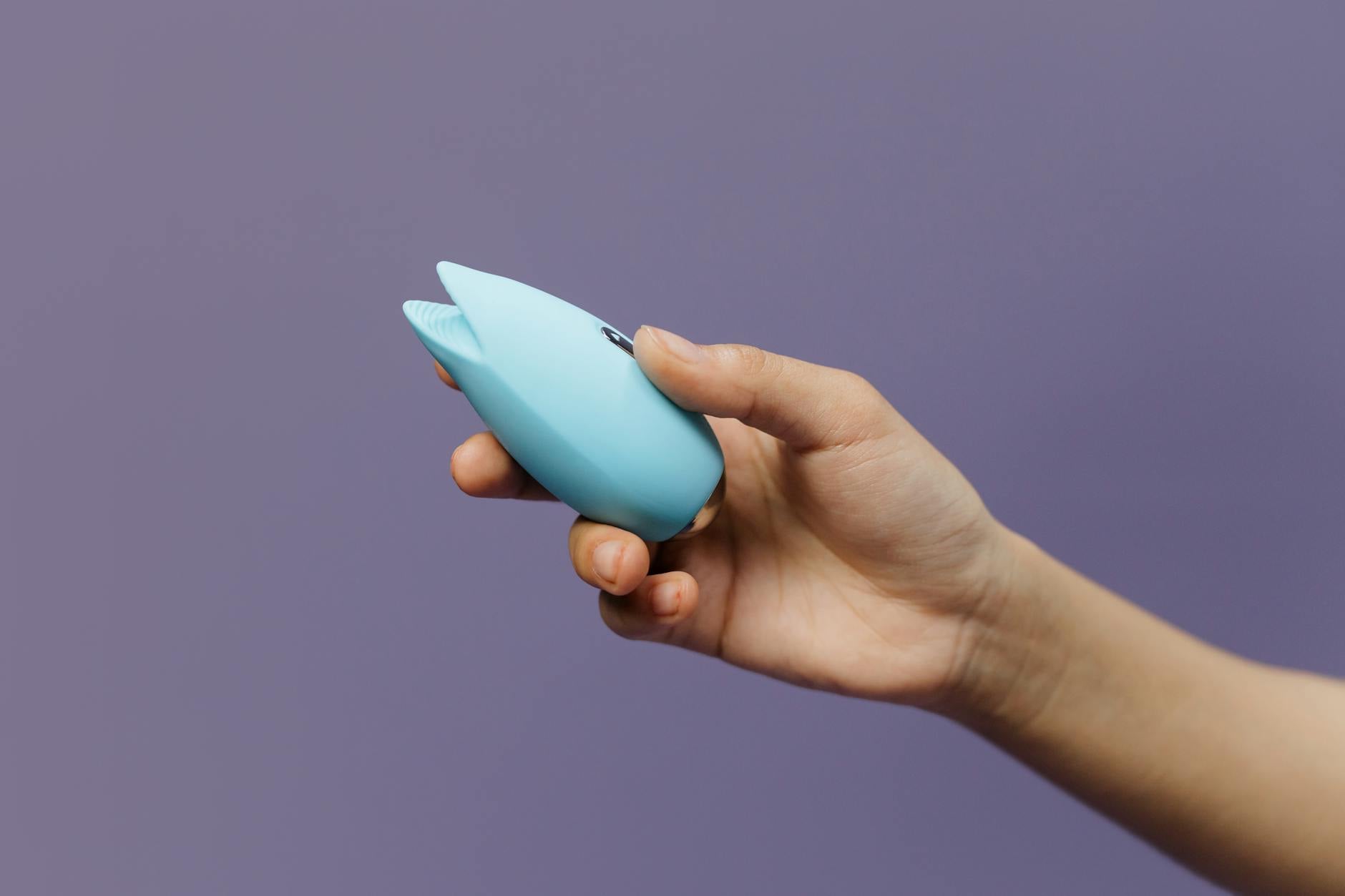
A clitoral vibrator like the Lemon doesn't directly release pelvic floor tension. But it creates the conditions where release becomes possible. Here's how.
First, clitoral vibrators build sensation more gradually and predictably than manual stimulation. With your hand, intensity fluctuates. With a vibrator set to a consistent rhythm, your nervous system settles. That consistency lowers the background noise of stress and anticipation, which paradoxically helps your pelvic floor relax.
Second, the suction mechanism of the Lemon (air-pulse technology, not traditional vibration) feels fundamentally different on the clitoris. It creates a gentle, rhythmic pressure that some people find less intense in a way that matters. When you don't feel like you're being overstimulated or chased by sensation, your pelvic floor releases more easily.
Third, a vibrator gives you the freedom to focus on breathing and relaxation instead of mechanics. When you're using your hand, part of your brain is managing the motion. With a vibrator, you can breathe, relax, and just receive. That mental shift is everything.
The setup that matters most
If pelvic floor tension is your issue, the physical setup changes.
1. Start lower intensity than you think you need. If you usually hit pattern 4 or 5 on a clitoral vibrator, start at 1 or 2. The goal is not to chase orgasm. It's to let your pelvic floor know it's safe to relax. Lower intensity feels less urgent, less like something you have to perform for.
2. Use your hand on your lower belly or inner thighs. While you're using the Lemon on your clitoris, place your other hand on your lower abdomen or your inner thighs. This gives your nervous system something to focus on besides the clitoral sensation. It also gives you proprioceptive feedback (awareness of where your body is in space), which helps ground you.
3. Breathe into the sensation. This matters more than anything else. Shallow breathing keeps you in a sympathetic state (fight or flight). To release your pelvic floor, you need to be in a parasympathetic state (rest and digest). Breathe in for four counts, out for six. Feel the breath move through your belly and your pelvic floor. You're not trying to force anything. You're just creating space.
4. Stop chasing the finish. This one is hard because we're conditioned to think of pleasure as a goal with a finish line. When your pelvic floor is tense, the goal becomes the enemy. Instead, set a different target: spend 20 minutes building sensation, no orgasm required. Just feeling. Just receiving. Orgasm will either happen or it won't. Both are fine.
When to bring a partner in
If you're partnered, this is where communication saves everything. Your partner needs to understand that this isn't about their touch or their attraction. It's literally a reflex your body is running without your consent.
If your partner is helping, the setup stays the same. They use the Lemon on you at a lower intensity than you might expect. You focus on breathing and relaxation. They can mirror your breathing or place a hand on your belly. They can whisper something calming. They can remind you that there's no deadline.
What they shouldn't do: try to escalate intensity to "push you over the edge." That triggers more tension, not less. It puts the burden on them to make something happen, which transfers stress to you.
The timeline for release
This doesn't happen overnight. If your pelvic floor has been holding tension during sex for years, it's not going to suddenly relax in one session. Think in terms of weeks, not days.
Week one to two: you're just noticing the tension. Maybe you feel it start to ease for a few seconds before it comes back. That counts.
Week three to four: you can sustain 5-10 minutes of relaxation with the vibrator. Orgasm might not come, but the sensation is fuller and less trapped.
Week five onward: your nervous system is learning that pleasure is safe. Release becomes easier. Orgasm might return, or it might feel different. Both are progress.
Red flags to watch for
If you experience sharp pain during or after using a vibrator, especially pain inside the vagina or at the pelvic floor, stop and see a pelvic floor physical therapist. That's different from tension. That's a sign something needs professional attention.
If you're also dealing with pain during penetration, urinary urgency, or painful periods, those often sit alongside pelvic floor dysfunction. A pelvic floor PT can assess what's going on and give you targeted exercises.
And if tension has been your issue for years, therapy (somatic therapy, sex therapy, or regular talk therapy) alongside physical tools makes a massive difference. Your pelvic floor is also holding your nervous system. If there's old trauma, stress, or anxiety, your body remembers it.
The shift that matters
When pelvic floor tension is the issue, using a lemon vibrator isn't about more stimulation. It's about permission. Permission to slow down, to breathe, to not perform, to let your body learn that release is safe. The vibrator is just the tool that makes that permission feel possible.
Orgasm might come back exactly as it was. It might feel different. But the real win is the moment your pelvic floor stops bracing and just receives.