
Here's what no one tells you about mismatched desire
You want sex twice a week. Your partner wants it twice a month. Neither of you is wrong. Both of you are slowly building resentment. One person starts feeling rejected. The other feels pressured. And somewhere in that friction, desire drops even lower.
The Lemon Vibrator doesn't fix a mismatch in initiation frequency. But it does something arguably more important: it untangles your pleasure from your partner's availability, which means you can stop treating sex like a negotiation and start treating it like something you both deserve.
Why frequency mismatches feel like a relationship problem
They're not, technically. They're a logistics problem wearing a relationship disguise.
When desire frequencies don't align, the higher-desire person typically responds one of two ways. They either suppress their own needs (which kills attraction over time), or they ask their partner more often (which their partner experiences as pressure, which kills their desire even faster). It's a loop that looks like a personality mismatch but is actually a communication structure problem.
Meanwhile, the lower-desire partner often feels like their natural rhythm is "wrong" or that they're not attracted anymore. Sometimes that's true. Often, though, they're simply more introverted, lower in baseline testosterone, or managing stress that genuinely tanks libido. Their desire isn't broken. The mismatch just makes it feel that way.
A lemon clitoral vibrator enters this system not to make anyone change their baseline desire, but to create a third option neither person had before.
The permission piece
This is the part I see shift most visibly in couples where one partner initiates less.
When you have a Lemon Vibrator in your regular rotation, you're saying something wordless but clear to both yourself and your partner: "My pleasure doesn't require your participation to be valid." That sounds simple, and it is. It's also revolutionary in a relationship where one person has silently been keeping score of rejections.
The lower-desire partner often softens when they realize they're no longer the gatekeeper of your sexual satisfaction. Pressure lifts. And sometimes, weirdly, desire rises in that space. Not always. But often enough that it's worth knowing.
For the higher-desire partner, there's a different permission that matters: the right to pleasure that isn't about convincing someone else. A lemon sucker vibrator becomes a form of sexual agency that doesn't depend on negotiation.
How to actually use it when initiation frequency differs
Solo sessions that aren't a substitute for partnered sex. This is the distinction that matters. If you use a clitoral vibrator every time you want sex but your partner doesn't, you're managing the gap rather than addressing it. Instead, use it on nights when you're genuinely solo (partner is traveling, working late, legitimately unavailable) or when the mismatch is particularly acute and you need release without the awkwardness of asking.
The goal is to reduce the emotional weight of unmatched desire, not to pretend it doesn't exist.
Partnered sessions where the vibrator bridges the gap. This is where things actually shift. If your partner initiates monthly and you'd prefer twice weekly, a lemon vibrator in partnered sex means you're getting more frequent pleasure through a different route. You're not waiting for them to want penetration. You're building connected time that addresses both people's baseline needs.
Some partners find this threatening at first. More often, they find it relieving. There's less pressure to "perform" or last longer. The focus shifts to mutual pleasure rather than one person trying to satisfy the other.
The conversation before you introduce it. This matters more than the device itself. Framing is everything. "I love you and I'm not going anywhere" is the frame. "My body has needs independent of yours" is the substance. "I want us to have more sexual connection, and I've realized some of that can happen without it being something you have to initiate or participate in alone."
If your partner responds with defensiveness, that's worth exploring separately. It might mean they're feeling pressure they haven't named, or it might mean they're uncomfortable with your autonomy. Both are useful information.
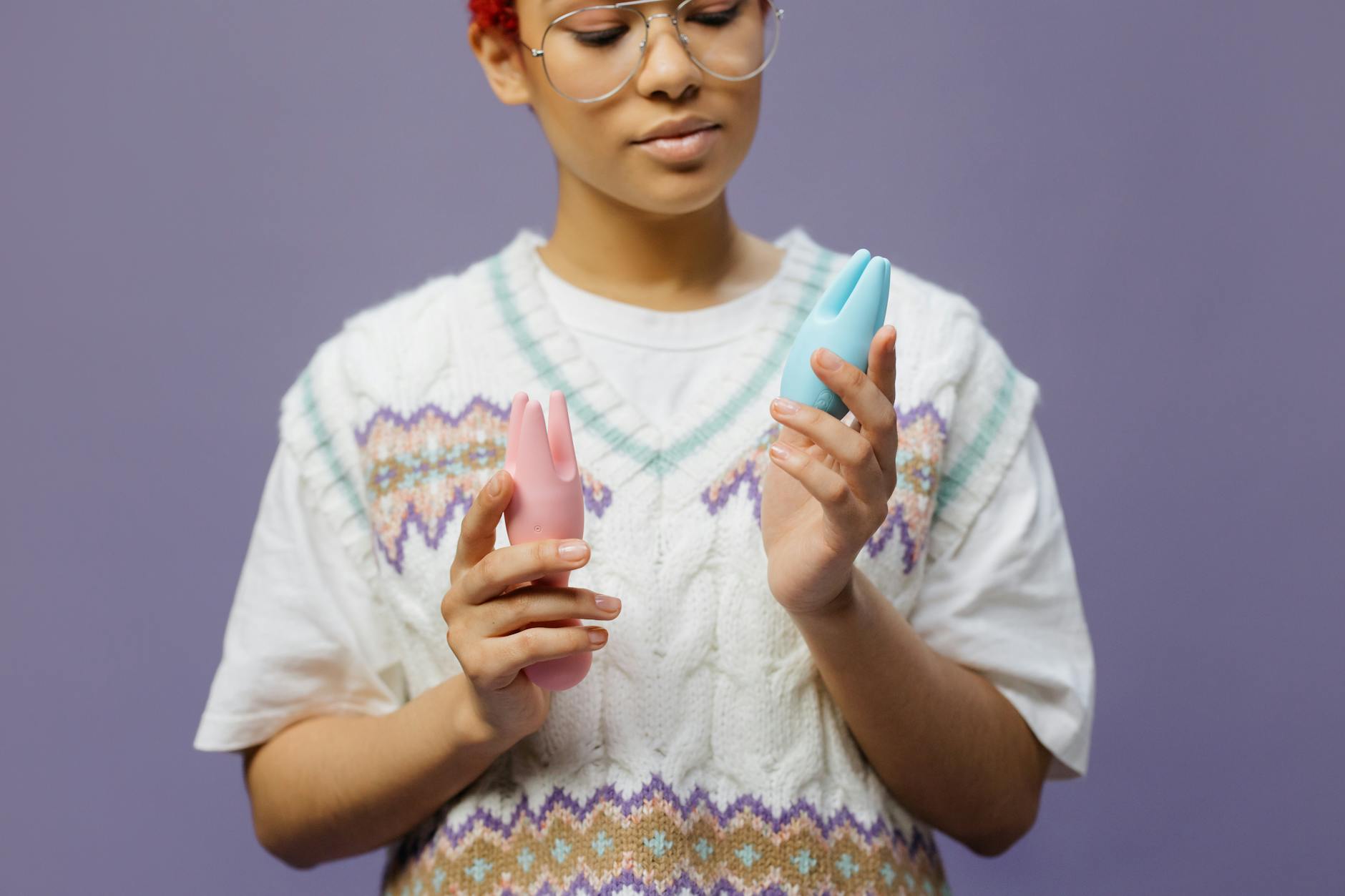
Photo by cottonbro studio on Pexels
The data thing nobody expects
Research from the Journal of Sexual Medicine found that couples where both partners use vibrators report significantly higher sexual satisfaction than couples where only one does, regardless of frequency. The frequency doesn't change. The satisfaction does.
This sounds counterintuitive until you realize what's actually being measured: satisfaction isn't about how often you have sex. It's about how connected you feel to your own pleasure and your partner's support of it.
A lemon clitoral vibrator as a shared tool (not a replacement, a tool) shifts that metric dramatically. You're not fighting about initiation anymore. You're collaborating on pleasure.
What changes and what doesn't
Using a vibrator when your partner initiates less will not magically make them want sex more often. If they have low desire because of depression, relationship issues, or medical factors, those need separate attention. A clitoral vibrator isn't therapy.
What it does do: it stops desire mismatch from becoming a character issue ("They don't want me") and lets it stay what it actually is ("We have different baseline frequencies"). That shift alone changes how couples navigate the gap.
It also means the higher-desire partner stops translating sexual rejection into personal rejection. Because you're not waiting for them to want you. You're taking your own pleasure seriously, which paradoxically makes partnered sex less fraught when it happens.
The conversation that comes after
Once a lemon vibrator is in the picture and you're both comfortable with it, sometimes couples find themselves actually talking about desire for the first time. Not arguing about it. Talking about it.
"Why do you want sex less often?" becomes a real question with a real answer instead of an accusation. "How can we both get our needs met?" becomes answerable because you've already changed the equation.
This is where I typically see the most movement in couples with frequency mismatches. Not that the frequency itself changes (though sometimes it does), but that the resentment around it dissolves. You're working together instead of against each other.
When to involve a professional
If the frequency mismatch is a symptom of something deeper (disconnection, infidelity, unresolved anger, or a medical issue causing low desire), a vibrator helps with the symptom but not the cause. That's the point where a couples therapist is actually the better tool.
But if it's just a straightforward mismatch in baseline desire between two people who genuinely care about each other, a lemon sexual toy can be the exact thing that stops the dynamic from poisoning everything else.
Your pleasure matters independent of your partner's availability. A lemon vibrator is just the device that gives you permission to live that out.
People also ask
Will using a vibrator make my partner feel less desired?
Sometimes, initially. Most of the time, no. The key is framing it as an addition, not a replacement. "I want more sexual connection with you, and I also need to take my pleasure seriously" is different from "I'd rather use this than have you touch me." One invites partnership. The other sounds like rejection. Your language around it matters enormously.
Can a clitoral vibrator replace partnered sex when my partner doesn't initiate?
It can reduce the gap, but it's not the same thing. Partnered sex involves connection, vulnerability, and shared experience that solo pleasure doesn't replicate. What a lemon clitoral vibrator does is keep you from feeling starved in the meantime. It's a bridge, not a destination.
How often should I use a vibrator if my partner initiates less?
As often as you want. There's no magic number. Some people use it weekly when their partner isn't available. Some use it during partnered sex to increase frequency without asking their partner to change their baseline desire. The point is that your needs don't have to wait for their mood.
Does using a lemon vibrator make it harder to orgasm with a partner?
No, but vibrators do train your body to prefer specific sensations. If you use a suction vibrator solo frequently and then expect the same sensation from hand stimulation, you might notice a difference. This isn't a problem. It's information. It tells you what your body likes and gives you language to share that with your partner.
What if my partner says they feel replaced?
That's worth taking seriously, but not at the expense of your own pleasure. Explore it together. Often what feels like replacement anxiety is actually fear that you're losing interest in them. Reassurance helps. So does involving them. Some couples find that using a lemon vibrator together actually increases intimacy rather than threatening it.
Can a vibrator fix a relationship with a partner who never initiates?
No. A vibrator fixes your access to pleasure. It doesn't fix a relationship where one person has checked out entirely. If your partner has stopped initiating and shows no interest in reconnecting, that's a separate conversation. The vibrator isn't the answer. Honest communication or professional help is.
The real shift happens when you stop treating your desire as something that requires your partner's participation to be legitimate. A lemon vibrator is just the tool that makes that shift concrete. Your pleasure matters. It's not optional. It's not dependent on how often someone else initiates. It's yours, fully and completely. Everything else follows from that.
If you're navigating a frequency mismatch in your relationship, contact us to talk through how to approach this conversation with your partner.