Let's talk about the awkward part first
You're lying there, your body's ready, and your partner is... somewhere else. Scrolling. Tired. Distracted. Not initiating. Not even responding when you do. And you're left wondering: is this me, or is this us? Here's what I know after twenty years of listening to couples in exactly this spot: it's almost always a relationship problem wearing a sex problem mask.
A Lemon Vibrator won't fix a disengaged partner. But it can do something more useful. It can become a mirror, a boundary, and a conversation starter all at once.
The thing nobody says about pleasure and partnership
When your partner seems uninterested in your pleasure, the instinct is to blame yourself. Your body's changed. You're less attractive now. You want sex more than they do. You're asking too much. But let me flip this for you: a partner who's checked out of your pleasure is, by definition, checked out of a core part of emotional intimacy. This isn't about frequency. It's about presence.
Research on long-term couples shows that sexual disengagement often signals emotional disconnection that started elsewhere. A partner scrolling during foreplay isn't lazy in bed. They're usually anxious, resentful, overwhelmed, or secretly unhappy about something that has nothing to do with you. That knowledge doesn't fix it. But it does reframe your job. You're not here to be more arousing. You're here to decide what you're willing to accept and then communicate it.
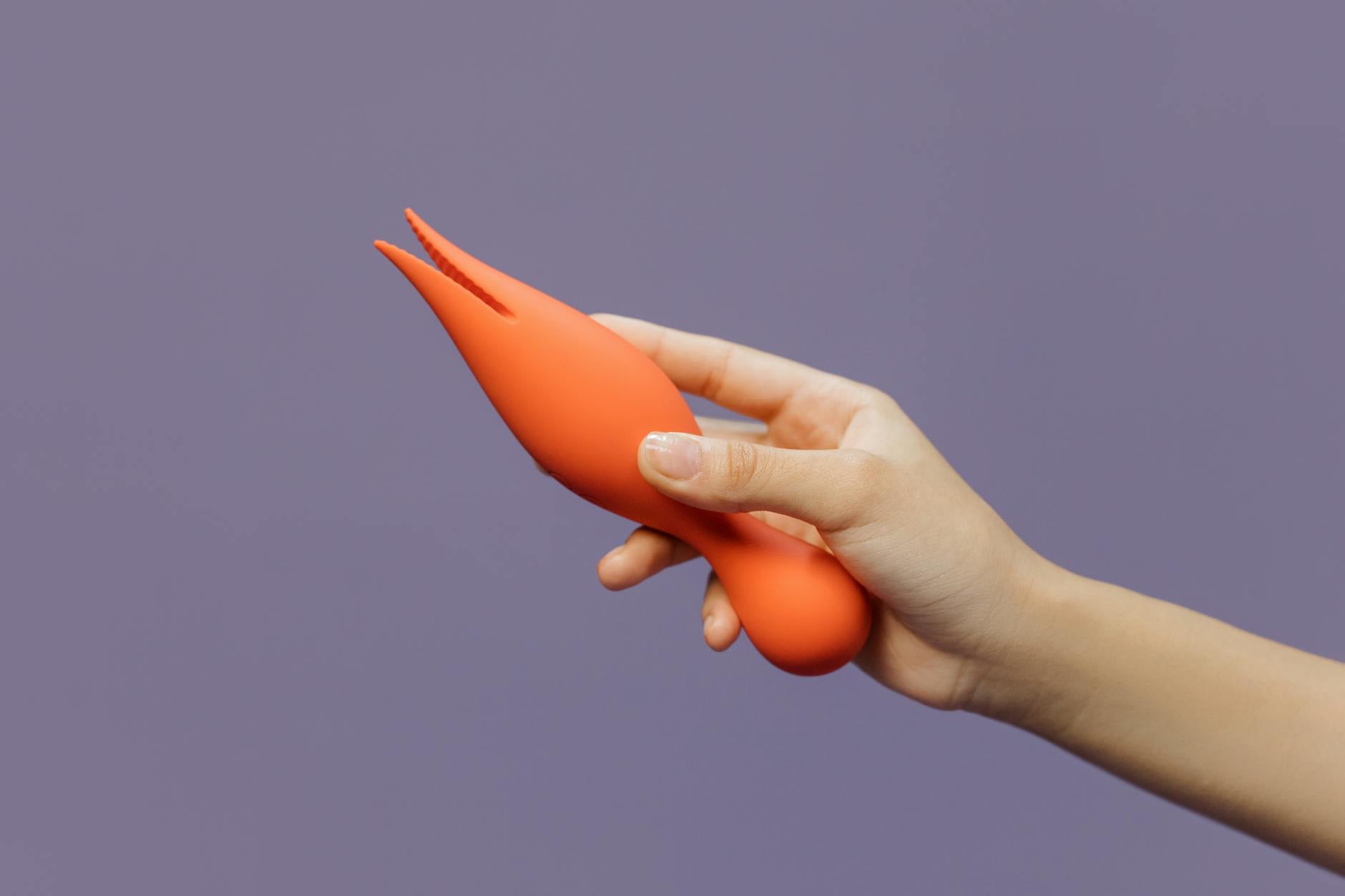
A lemon clitoral vibrator enters this picture not as a workaround, but as a tool for clarity.
Why introducing a vibrator now matters differently
There's a wrong way and a right way to bring toys into a situation like this. The wrong way is framing it as "since you won't, I will," which feels like an accusation and triggers defensiveness. The right way is different. It's about reclaiming your own pleasure as non-negotiable, independently, and then inviting your partner into that reclamation.
When you start using a Lemon Vibrator solo, in front of your partner, you're essentially saying: my pleasure is real, it matters, and I'm not waiting for permission. Some partners find this incredibly hot. Others find it threatening because it exposes their own withdrawal. Either way, it's information. Good information.
If your partner suddenly becomes interested once a vibrator appears, that tells you they were never checked out of pleasure itself. They were checked out of you specifically, or out of the relational labor of sex, or both. If they remain checked out, that tells you something even more important: this is a deeper issue that a toy alone can't address.
How to use a lemon sucker intentionally (not defensively)
Start with yourself. Solo play matters more here than in almost any other scenario because it decouples pleasure from your partner's presence or approval. Here's what I recommend:
First week: rediscover what actually works for you. Use your Lemon Vibrator alone, no pressure, no goal of orgasm. Just explore. What pattern feels good? Do you like slow buildup or fast intensity from the start? Do you need penetration alongside clitoral stimulation or not? After months or years of partnered sex where someone's else's needs shaped your experience, you've probably forgotten what you actually like. This solo time is reconnaissance.
Second week: use it with your partner present but uninvolved. You're in bed together. You're using your lemon vibrator. You're not explaining it, performing it, or asking permission. You're just... doing it. Some partners will want to help. Some will leave the room. Both responses matter. Notice which it is.
Third week onward: if they show interest, invite collaboration. "I feel good when you touch me here while I use this." "Want to hold it?" "I'm close, tell me what you're feeling right now." These small invitations test whether they actually want to be present, or whether they want to remain absent. The difference will become very clear.
What this really tells you about your relationship
I've worked with hundreds of couples where toys became a flashpoint. Here's what I've learned: a partner who becomes engaged once a vibrator enters the picture often reconnects with the erotic part of your relationship. That's good. But a partner who remains disengaged, who doesn't ask questions, who seems annoyed or threatened—that's different. That withdrawal is about something bigger than sex. It might be resentment. It might be their own depression or anxiety. It might be that they've emotionally checked out of the relationship itself.
Using a Lemon Vibrator in this dynamic isn't a way to fix your partner. It's a way to get clarity about whether they're willing to meet you halfway, or whether you're in a relationship where your pleasure has become genuinely unimportant to them. Both are valid answers. One just requires a different choice.
The conversation you probably need to have anyway
Introducing a vibrator without talking about why you're introducing it is like buying a house key without discussing where you're going to live. The tool is secondary to the conversation. Here's what I'd say, and why:
"I've noticed that my pleasure seems to matter less lately, and I'm not okay with that. I'm going to start using toys because my body deserves attention, whether you're interested or not. I'd love for you to be part of that. But I need to know: are you still invested in my satisfaction, or have we drifted somewhere?" This isn't accusatory. It's direct. It opens the door instead of slamming it. And it forces your partner to actually answer instead of passively withdrawing.
Some partners will say yes and mean it. Some will say yes and not change anything, which tells you they mean something else. Some will get defensive, which usually means they're scared or ashamed. None of these are your problem to solve alone. But they're all information you need.
If your partner is willing to talk about what's happened between you, you might benefit from working with a couples therapist. The withdrawal you're sensing isn't random. It has roots. And those roots matter more than whether you orgasm during the next encounter.
When to use the vibrator solo versus together
Honestly, I'd default to solo for now. Here's why: you need to establish that your pleasure doesn't depend on their participation. Using a lemon clitoral vibrator alone, regularly, sends a message to your brain and your body. It says: I don't have to wait. I don't have to be interested enough for two people. I matter. That shift in your own internal narrative is half the battle.
Shared vibrator time can come later, if and when your partner shows genuine interest. Right now, solo use is about reclamation. It's about taking back the part of yourself that's been waiting for permission.
The deeper question: what are you actually looking for?
Before you go further, ask yourself this: are you looking to repair the relationship, or are you looking to figure out if it's worth repairing? These are different goals and they lead to different actions. If it's the former, a conversation and possibly couples counseling come first. A vibrator is a tool in that toolkit, not the toolkit itself. If it's the latter, using a Lemon Vibrator solo helps you remember what pleasure without obligation feels like. That matters too.
Your body is not the problem here. Your partner's presence or absence is. And you deserve to know which it is.
FAQ: Using vibrators when partnership feels disconnected
How do I introduce a vibrator without making my partner feel inadequate?
Frame it as something for you, not a critique of them. "I want to explore my body more" is different from "you're not enough." That said, if your partner feels threatened by a vibrator, that's worth examining. Sexual insecurity is common, but refusing to acknowledge it keeps both of you stuck. Approach the conversation with curiosity: "I'm sensing this makes you uncomfortable. Can we talk about what that's about?" You're not responsible for managing their feelings, but you are responsible for understanding what you're working with.
Should I use the vibrator during partnered sex if they seem uninterested?
Depends. If you're trying to salvage intimacy and they're willing to be present, yes—a lemon sucker can actually bring them back into focus because they can see and feel what's working for you. But if they're actively withdrawn or dismissive, using it might escalate resentment. Solo use first. Partner use comes after you've had a real conversation about whether they want to be there.
What if my partner refuses to discuss the disconnect?
Then you have your answer. A partner who won't talk about emotional or physical distance is signaling that the relationship isn't a priority for them. That's the information you need. You can try couples therapy if you want to give it another push, but ultimatums only work if you're willing to follow through. Using a lemon clitoral vibrator solo becomes less about "fixing" your relationship and more about building a life that works for you regardless.
Can a vibrator actually bring us closer?
Sometimes. If your partner was just stuck in a rut and seeing you reclaim pleasure sparks something in them, yes. But be honest: that's lucky, not likely. More often, toys reveal what's already true—either your partner cares about your satisfaction or they don't. A vibrator is just the mirror.
How long should I wait for things to change before deciding the relationship isn't working?
That's not a sex question. That's a life question. I'd say: if after an honest conversation and a genuine attempt to reconnect (with professional help if possible) your partner still can't show up for your pleasure, you have your answer. Three months? Six months? That's between you and your own boundary. But don't wait until you've completely disconnected from your body waiting for permission to feel good.
What if I'm the one who's checked out and my partner wants me to use a vibrator with them?
That's different. If you're not interested in your partner's pleasure, there's something broken between you. A toy won't fix it. A conversation about what happened to your desire for them is the starting point. Sometimes that leads to reconnection. Sometimes it leads to an honest conclusion that you've grown apart. Either way, it starts with honesty, not toys.
The bottom line
A Lemon Vibrator is a tool. But what you're really doing by introducing it into a disconnected dynamic is testing whether your partner cares enough about you to show up when they're asked. That's the real question. Everything else—pleasure, frequency, satisfaction—sits on top of that foundation. If the foundation isn't solid, no amount of vibration is going to fix it. But knowing that clearly, early, with tools like a lemon sexual toy to help you figure it out, is worth everything. Your pleasure is not negotiable. Make sure your partner knows that before you decide whether they stay.