Let's name what's actually happening
Penetration causes discomfort. That's not a character flaw, a sign you're not ready, or proof that something is wrong with you. It's your nervous system sending a clear signal. The question isn't how to override that signal. It's how to work with it.
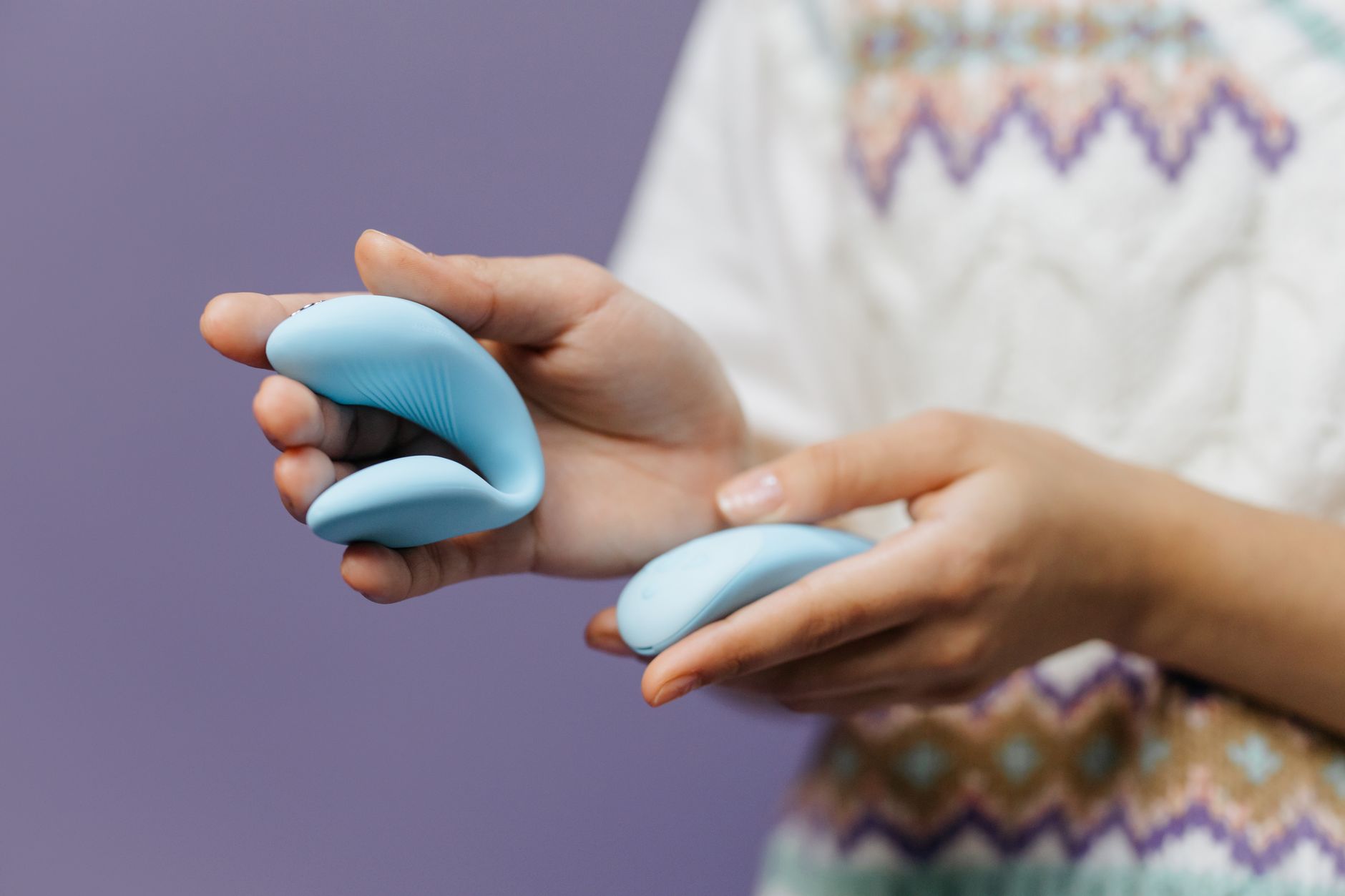
When you have a clitoral vibrator like the Lem, you're not solving the problem of penetration pain by ignoring it. You're solving it by changing the entire structure of how pleasure moves through your body. That's radically different from white-knuckling through discomfort.
Why penetration pain happens (and why it's not your fault)
Three primary culprits show up over and over in my practice. Sometimes it's one. Often it's all three tangled together.
Vaginismus and pelvic floor tension. When your pelvic floor muscles anticipate pain, they tighten in advance. This creates actual pain during penetration, which then teaches your nervous system to tighten even more next time. It becomes a feedback loop. You're not doing this consciously. Your body is protecting you.
Vulvodynia or vestibulodynia. Chronic pain in the vulva or the vestibule (the tissue between the inner and outer labia) can make penetration feel like you're being prodded with something sharp. This is a real, diagnosable condition that affects millions of people. It's not psychological. It's not about not being relaxed enough.
Insufficient arousal or lubrication. If you're jumping into penetration before your body has had time to respond, the tissue stays relatively dry and inelastic. Penetration then feels like friction and pressure rather than anything pleasurable. This one is especially common if you're under stress, on certain medications, or if your partner isn't reading the room.
Why clitoral stimulation changes everything
Here's the neurology: your clitoris has roughly 8,000 nerve endings packed into a structure smaller than a pea. When you stimulate the clitoris, you're activating a massive amount of neural real estate with very little direct pressure. By contrast, penetration spreads stimulus across the vaginal walls and deeper tissue, which means the same amount of sensation gets distributed over much more area.
For someone experiencing penetration pain, this matters enormously. A lemon vibrator delivers focused, intense sensation to a part of your body that's designed to receive it without triggering the pain response. You get pleasure. Your nervous system gets safety. That's not a workaround. That's the solution.
When you use a clitoral vibrator while a partner penetrates you, or instead of penetration entirely, you're also changing what arousal feels like in your body. Full-body arousal and clitoral arousal create slightly different neural signatures. Clitoral pleasure often builds faster and feels more localized. Some people find that clitoral focus actually helps them relax the pelvic floor, which then makes other kinds of touch less painful over time.
How to actually use a clitoral vibrator when penetration hurts
Solo, start here. Before you bring a partner into the equation, spend time learning what your clitoris actually likes. Sounds basic, but most people who experience penetration pain have spent years trying to adapt to what they think they should like. Use the Lem at different intensities. Notice which patterns and speeds feel good without any edge of discomfort. Spend 20 minutes with no goal except sensation. This teaches your nervous system that pleasure is possible in your body. That's foundational.
Then, partnered exploration. When you're ready to bring a partner in, the conversation doesn't start during sex. It starts before. "Penetration has been painful, and I want to explore what actually feels good. I want to use my vibrator while you're inside me, or just focus on clitoral stimulation together. What does that sound like to you?" If your partner responds with "but I want to feel you" or "that's not real sex," that's a compatibility issue, not a you issue. File that away.
When you're actually together, the sequence matters. Start with extended clitoral stimulation before anyone even thinks about penetration. Let your body reach a genuine arousal plateau. Your vaginal tissue will naturally become more elastic and lubricated. Your nervous system will be in a state of "yes" rather than anticipatory protection. Then, if penetration happens, it happens from a place of fullness rather than deficit.
If penetration stays painful, you don't have to do it. Plenty of sex doesn't include penetration. You can use your lemon vibrator during oral sex. You can use it while your partner uses a toy. You can use it solo while your partner is inside you with no movement. You can use it during manual stimulation. The number of ways to have sex and pleasure is genuinely unlimited if you stop thinking of penetration as the default.
When to see a pelvic health specialist
If penetration pain has been present for more than a few months, it's worth getting assessed by a pelvic floor physical therapist. Not because you're broken, but because vaginismus and pelvic floor dysfunction respond really well to physical therapy. A good PT will teach you how to gradually desensitize your pelvic floor and work with breathing and relaxation techniques that actually retrain your nervous system.
If the pain is sharp, burning, or localized to one area (rather than general tightness throughout), see a gynecologist who has experience with vulvodynia. Topical treatments, nerve blocks, and certain medications can help significantly. These are not hacks. They're legitimate medical approaches.
The partner conversation that actually works
Between you and me, the biggest barrier to using a lemon vibrator comfortably when penetration hurts isn't the vibrator. It's the story your partner is telling themselves about what sex "should" look like.
Some partners hear "penetration hurts" and go into problem-solving mode. "How can we fix this so we can go back to normal?" Other partners hear it and feel rejected, like your body is saying no to them specifically. Neither interpretation helps.
What actually helps is reframing. You're not avoiding penetration because you don't want your partner. You're redesigning pleasure because the current structure doesn't work. A clitoral vibrator isn't a consolation prize. It's literally the most direct path to intense orgasm for most people with clitorises. You're not settling. You're upgrading.
Some of the most satisfying sex I've seen couples report happens after one partner's penetration pain gets addressed through clitoral focus. Because then both people are fully present. No one is braced for pain. No one is trying to perform through discomfort. Both people are actually getting pleasure.
FAQ: Penetration Pain and Clitoral Stimulation
Can using a vibrator make penetration pain worse over time?
No. In fact, the opposite is often true. When you regularly experience pleasure from clitoral stimulation without pain, your nervous system starts to recalibrate. You're teaching your body that touch can feel good. This sometimes makes other kinds of touch, including eventual penetration, less triggering. That said, if you use a vibrator in a way that causes discomfort, stop. Pleasure should never feel like you're powering through.
Is penetration pain always vaginismus or a pelvic floor issue?
No. It could be vulvodynia, hormonal changes, scar tissue, endometriosis, an allergic reaction to condom latex or lube, insufficient arousal, or even just the wrong angle. Some penetration pain is medical. Some is psychological. Some is both. A gynecologist or pelvic floor PT can help you figure out which. A clitoral vibrator helps you have pleasure while you're getting that sorted.
Does my partner need to be inside me while I use a lemon vibrator, or can we skip penetration entirely?
You can skip it entirely. Many couples find that clitoral-focused pleasure, with or without manual stimulation from a partner, is more satisfying than penetration ever was. There's no rule that sex has to include penetration. If penetration has caused you pain, ditching it is not a loss. It's a liberation.
What if my partner feels like my vibrator is replacing them?
This is worth naming directly. "I'm not choosing the vibrator over you. I'm choosing pleasure and safety over pain. That's not rejecting you. That's including both of us." If your partner can't get on board with that, couples therapy might help. If they still won't, that's information about whether this relationship is set up to support your pleasure. That's important to know.
Can penetration pain go away on its own?
Sometimes. Stress decreases, medical issues resolve, and nervous systems recalibrate. But waiting and hoping is often much slower than actively working with a pelvic floor PT or sex therapist. If it's been bothering you for months, get professional input. The goal isn't just making penetration stop hurting. It's getting your whole body back to a state where pleasure feels possible.
Should I feel guilty using a vibrator if my partner finds it threatening?
No. Your pleasure is not negotiable. If a partner feels threatened by a piece of silicone that helps you experience orgasm, that's their insecurity to work through, not your responsibility to accommodate by staying in pain. You deserve to have pleasure in your own body. Full stop.
The broader point
Lemon vibrators weren't designed as a workaround for people who can't have "normal" sex. They were designed because clitoral stimulation is the most direct, reliable path to pleasure for most people. When penetration causes discomfort, using a vibrator isn't settling. It's actually honoring what your body is asking for. Your nervous system knows what it needs. Listen to it.