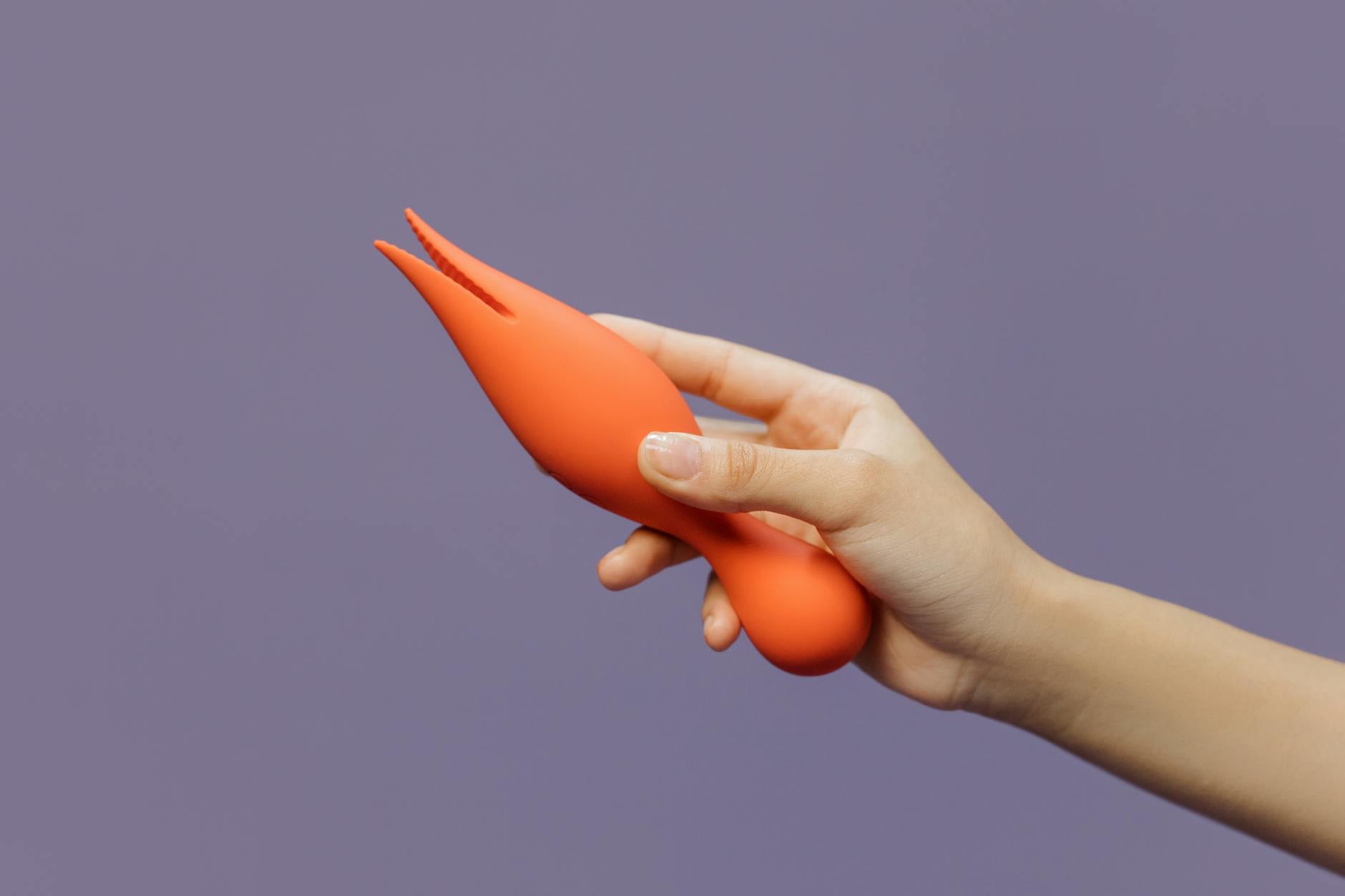
Let's be real about what body changes do
When your body shifts, your brain gets the memo before your pleasure does. Weight gain, surgery scars, aging skin, stretch marks, changed anatomy after kids. None of these actually change your capacity for orgasm. But all of them change how you feel about yourself when you're trying to have one. That gap between what's physically possible and what you believe is possible right now? That's the space we're working with today.
The good news: rebuilding confidence during pleasure isn't mystical or slow. It's systematic, and tools like the Lemon Vibrator help because they shift the experience from performance to sensation. You stop watching yourself and start feeling yourself again.
Why body changes hit confidence harder than anatomy
Your nervous system doesn't read magazines or compare you to Instagram. But your brain does. And when your brain is busy narrating self-doubt, your body can't access the neural pathways it needs for arousal. Attraction doesn't live in the hypothalamus. It lives in the story you're telling yourself about whether you deserve pleasure right now.
Research on body image and sexual satisfaction shows something consistent: it's not the size or shape of your body that predicts pleasure. It's whether you're present in it. When you're self-conscious, your attention is divided. Half of you is in the moment, half is narrating criticism. That split attention tanks arousal faster than any biological factor.
Here's where lemon clitoral vibrators enter the picture. They work because they bypass the performance-watching part of your brain and activate the sensation-seeking part. You're not trying to get aroused. You're noticing what feels good.
Starting the reconnection: solo first
If your relationship to your body has taken a hit, the first move is solo exploration. Not as a warm-up to partnered sex, but as its own practice. Solo time gives you permission to stop being anyone's partner and just be someone's body.
Start with a Lemon Vibrator on the lowest setting. No goal. No timeline. Just attention. Sit somewhere comfortable where you won't be interrupted. Maybe you light a candle or put on music. The luxury here isn't the mood. It's the permission.
The lem vibrator's design matters here. Air-suction clitoral toys don't feel like penetration or like something's happening to you. They feel like gentle stimulation you can control completely. You're not pressing a vibrator against yourself. You're choosing the sensation. That agency is what rebuilds trust in your own body.
Many people report that the first time back is awkward or uncomfortable. That's normal. Your nervous system has been in protect mode. It takes a few sessions to downshift into receive mode. Expect sessions to feel weird for the first two or three attempts. By session four or five, your body remembers what it's supposed to do.
Using sensation to rebuild the story
As you spend solo time with a clitoral vibrator, you're not just chasing orgasm. You're gathering evidence that pleasure still lives in your body. That's the actual work. Your brain needs proof.
Pay attention to what sensations feel good and where. Maybe the Lem feels best on a lower pattern against one side of your clitoris. Maybe you like to build intensity slowly. Maybe you discover you prefer short bursts to continuous stimulation. These aren't weird preferences. These are you learning your body again after it changed.
Write down what you notice if it helps. "Lem on pattern 2 for 15 minutes, then pattern 4 felt good." Or "I liked it better when I was already aroused from something else." This isn't clinical. It's taking yourself seriously as a person who deserves to know what she likes.
The neurological piece: every time you notice a sensation that feels good, you're literally rewiring the association between your body and pleasure. You're building new evidence in your nervous system. After months of feeling disconnected, your body is proving to your brain that it still works. That it's still yours.
When you're ready to bring a partner in
Don't rush this part. But when you feel some reclaimed confidence, bringing your partner into the experience can deepen it. The move is not to hand them the Lemon Vibrator and hope they figure it out. It's to stay in charge.
Tell them what you've learned. "I like the lem on pattern 2." Or "I want to start slow and build up." Or "I want you to watch but not touch yet." Making the request doesn't kill the moment. It protects it. It says to your partner and to yourself, I know what I need.
If a partner has been distant or critical, this moment can feel risky. That's real. And it's also exactly the moment to remember: your pleasure isn't a performance for their approval. It's a reclamation of your own body. If they can't meet you with respect here, that's information about the relationship, not about your worthiness.
Many couples find that this solo confidence work actually strengthens partnered sex. You're less in your head. You're more able to direct what happens. You're not waiting for someone else to make it happen.
Addressing the specific fears
The most common worries I hear from people rebuilding after body changes: What if I look different when aroused? What if I can't come? What if my partner doesn't want to be there?
On the first: bodies change when aroused. Skin flushes, tissues swell, you breathe differently. If your body shape has changed overall, yes, it will look different aroused. That's not a bug. That's what arousal looks like. Your partner either finds that sexy or they don't. If they don't, that's something to work through with them. But it's not a reflection of whether you deserve to feel good.
On the second: you absolutely can come. Orgasm capability doesn't change with body shape. What changes is access. Some bodies need different angles or more time or less pressure. A clitoral vibrator gives you the option to find what works now. You're not broken. You're adapting.
On the third: your partner needs to want to be there. Not perform enthusiasm. Actually be present. If they're not, that's a different conversation and might need a relationship therapist, not a vibrator. But many partners feel relieved when you take charge of your own pleasure. They stop being responsible for making you come and start being invited into something you're already building.
The patterns that help most
If you're new to using lemon sexual toys for confidence rebuilding, here are the patterns that feel most accessible:
Start with patterns 1 and 2 for a few minutes. These build awareness without intensity. Then move to pattern 3 or 4 for longer, smoother stimulation. Save patterns 5 and above for when you're already aroused and know what you want. This isn't a rule. This is just what most people find helps them stay present instead of jumping to the strongest setting and losing sensation nuance.
Timing matters. If you've just eaten a heavy meal or you're stressed about something else, you're competing with that. Bodies are smart. They won't switch into pleasure mode if they're busy managing digestion or anxiety. Give yourself 15 to 20 minutes of wind-down before you start. It's not wasted time. It's honoring what your nervous system needs.
When body changes have created relationship friction
Sometimes body changes come with comments from a partner. Or assumptions. Or withdrawal. That shifts everything. You're not just rebuilding confidence in your body. You're rebuilding trust in whether it's safe to be vulnerable with this person.
If that's your situation, the Lemon Vibrator work is still valid. But it might need to happen alongside a harder conversation or alongside couples work. Your confidence matters. And so does whether your partner is actually safe.
Many couples who've navigated this tell me that explicit conversations about what's changed, what matters, and what they actually want unlock more than any tool can. A vibrator is excellent. But it's not a substitute for a partner who's chosen to show up with respect.
Moving from tool to trust
The goal of all this isn't to need a vibrator forever. The goal is to use it as a bridge back to trusting your body. Some people keep using lemon clitoral vibrators because they feel amazing. Other people find that after a few months of solo and partnered use, they've reclaimed enough confidence to explore other ways of having pleasure.
Both paths are fine. You're not failing if you still want the lem. You're not losing progress if you branch out. The win is that you moved from doubt to knowledge. You have evidence that your body is yours and that it works.
Rebuild at whatever pace feels right. There's no timeline for this. Your confidence returns when you prove to yourself, over and over, that pleasure is possible. The Lemon Vibrator just makes that proof easier to feel.
People also ask
How long does it take to rebuild confidence using a clitoral vibrator?
Most people notice a shift within two to four weeks of regular solo use, two to three times a week. But confidence is nonlinear. You might feel great one day and vulnerable the next. That's normal. The vibrator gives you a tool to reconnect when doubt creeps in. Patience matters more than speed here.
Can using a lemon vibrator actually change how I feel about my body?
It can change the relationship you have with sensation and pleasure, which shifts how you relate to your body overall. But it's not a miracle. The real work is the permission you give yourself to feel good and the consistent practice of doing it. The tool helps. You do the work.
What if my partner thinks using a vibrator means they're not enough?
That's a belief they need to work through, not something you fix by avoiding pleasure. If you frame it as reconnecting with yourself for both of you, many partners understand. Some don't. If they refuse to budge after direct conversation, that's a sign the relationship needs help beyond what a toy can offer.
Is it normal to feel awkward or disconnected the first few times using a lemon clitoral vibrator?
Completely normal. Your nervous system has been in protect mode. Shifting to receive mode takes practice. Expect the first few sessions to feel strange. By session four or five, most people feel more in their body, not less. Consistency matters more than intensity here.
Should I use a vibrator during partnered sex if I'm rebuilding confidence?
Yes, if that's what you want. Make it clear it's your choice. If using the lem during sex with a partner feels like pressure or like you're fixing yourself for them, pause and have a conversation. The vibrator is supposed to make pleasure easier, not more stressful.
How do I know if I'm using the vibrator for the right reasons?
Ask yourself: am I doing this to reclaim something about myself or to prove something to someone else? If it's reclamation, you're on the right track. If it's performance, step back. Let yourself want pleasure because you deserve it, not because you're trying to convince someone it's still possible.