
Let's name what's actually happening
Trauma doesn't just affect your mind. It rewires your nervous system, which means your body's threat-detection system stays hypervigilant long after the danger has passed. That hypervigilance shows up as numbness, disconnection, startled responses, or arousal that just won't arrive no matter how much you want it to. Your body isn't broken. It's protecting you. Understanding that distinction changes everything about how you approach pleasure again.
Many of my clients describe it as being locked behind glass. They can see desire from a distance, but reaching it feels impossible. Some describe a panic response that appears mid-arousal. Others feel nothing at all, which sometimes feels worse because it compounds the sense of loss. If that's you, you're not alone, and rebuilding is possible.
Why trauma numbs sensation
When your nervous system experiences overwhelming threat, it activates a freeze response. This is a survival mechanism. Your body essentially goes offline to protect itself from further harm. Over time, that freeze becomes your default setting. Your vagus nerve, which regulates your rest-and-digest state, stays stuck in high alert mode. Blood doesn't flow as freely to your genitals. Your capacity to feel pleasure dampens.
The good news: the nervous system is plastic. It can relearn. Pleasure isn't gone. It's just blocked by a protection system that worked brilliantly when you needed it.
Starting with nervous system safety first
Before you touch a lemon vibrator or any toy, you need to practice nervous system regulation. This isn't optional and it isn't fluffy. It's the foundation.
Three tools I recommend to every trauma-informed client:
Box breathing. Inhale for four counts, hold for four, exhale for four, hold for four. Repeat five to ten times. This activates your parasympathetic nervous system, the part that handles rest and recovery. Do this before any sexual exploration.
Bilateral stimulation. Touch both sides of your body simultaneously. Press your palms against your thighs, alternate tapping your feet, or squeeze a pillow between your knees. Your brain processes information differently when both hemispheres are engaged at once. This is why it helps with trauma processing.
Grounding anchors. Pick a physical sensation you can access anywhere: a piece of ice, a soft blanket, a specific scent, a texture. Before and during exploration, anchor yourself to that sensation. It gives your nervous system a safe point to return to if panic arrives.
Practice these for two to three weeks before introducing any toy. Your body needs to know that safety is possible first.
Why a lemon vibrator works for trauma recovery
Clitoral vibrators, particularly air-suction toys like the Lemon Vibrator, offer something critical for trauma survivors: control and precision.
Unlike penetration or hands-on touch, which can feel invasive or triggering, an air-suction clitoral vibrator lets you control intensity, duration, and whether sensation is happening at all. You can start at the lowest setting and adjust in real time. If something feels wrong, you stop instantly. That autonomy is therapeutic, not incidental.
The lemon vibrator's suction mechanism stimulates nerve endings without harsh friction, which means you're less likely to numb out from intensity. The sensation feels different from manual touch, which can be an advantage if manual touch carries trauma associations.
The step-by-step introduction
Don't rush this.
Week one: presence without activation. Hold the lemon vibrator. Feel its weight, texture, temperature. Let your nervous system get familiar with it without turning it on. This is not foreplay. This is introduction.
Week two: low vibration, no contact. Turn it on to the lowest setting and hold it near your body without touching your genitals. Feel the vibration on your thigh, your inner arm, your belly. Your nervous system needs to know this sensation is safe before it goes near vulnerable tissue.
Week three: light external contact. At the lowest setting, let the vibrator barely graze your external genitals for ten to fifteen seconds at a time. Stop. Breathe. Notice what your body is doing. Is your nervous system staying calm? If panic or numbness appears, that's data. Stop and return to grounding anchors.
Week four onward: gradual intensity increase. Only when your body feels stable should you move to patterns two or three. Never jump settings. Never push through panic or disconnection. Pleasure should feel like permission, not pressure.
This timeline might feel slow. It's supposed to.
Recognizing when your nervous system is dysregulated
You need to know the difference between normal sexual hesitation and trauma response.
Normal hesitation: slight nervousness that eases once you start, curiosity mixed with caution, natural pace changes.
Trauma dysregulation: sudden panic, dissociation or extreme detachment, breath that becomes shallow or stops, heart rate that spikes, overwhelming urge to escape, freezing mid-sensation, intrusive memories or flashbacks.
If you hit dysregulation, stop immediately. Return to grounding anchors. Do box breathing. Wrap yourself in that soft blanket. Your body is communicating. Listen to it.
Many survivors find that working with a trauma-informed therapist alongside pleasure exploration makes a real difference. You're not broken if you need that support. You're being wise.
When sensation starts returning
As your nervous system recalibrates, pleasure often comes back in unexpected ways. Some clients describe it as tingling at first, then warmth, then actual arousal. Others describe it as waves, where pleasure appears and disappears unpredictably. That variability is normal.
The key is patience. Some days your body will feel responsive. Some days it won't. Neither means you're failing. You're healing.
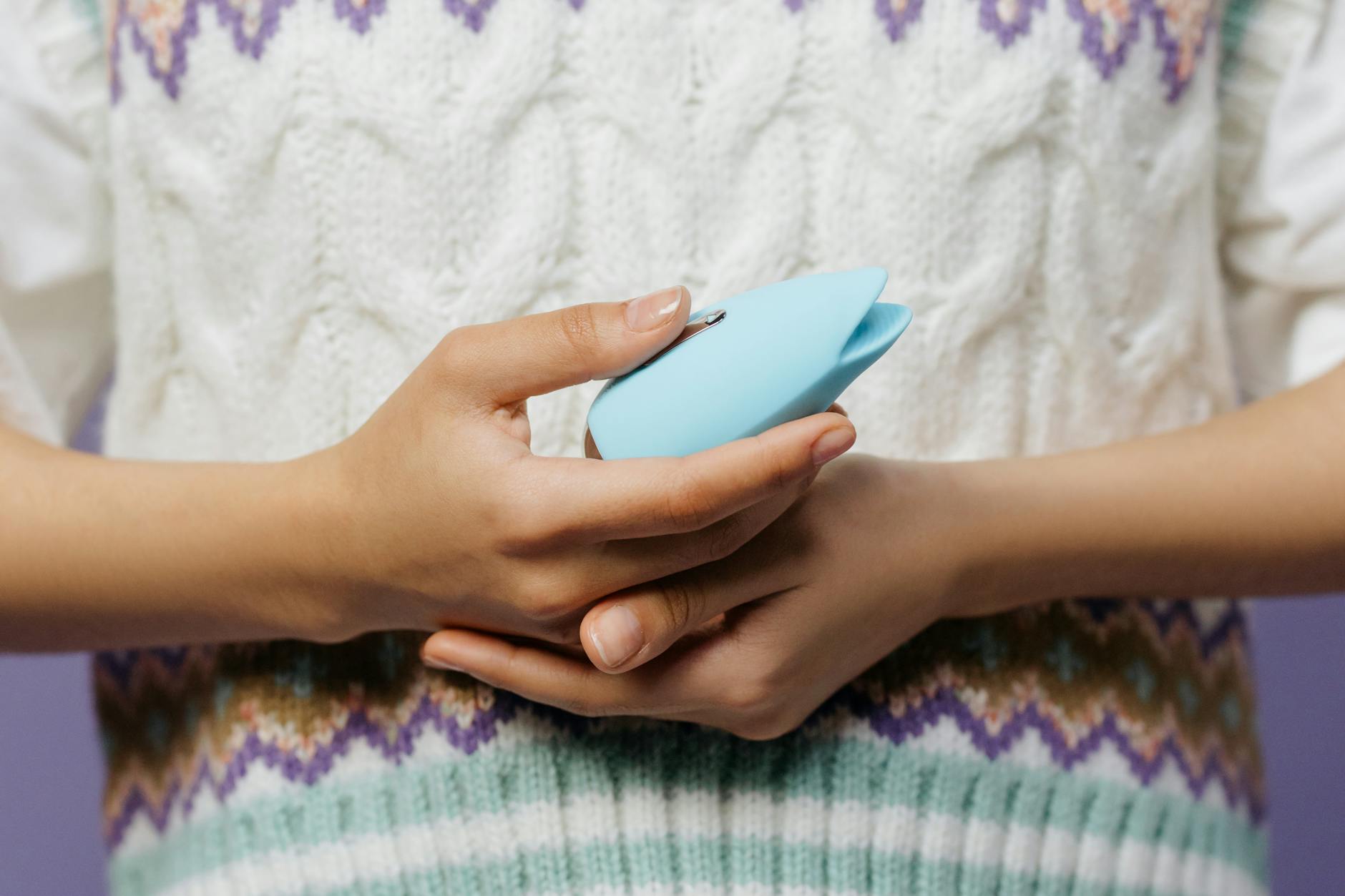
Photo by cottonbro studio on Pexels
Why partners matter, and why boundaries matter more
If you're rebuilding pleasure within a relationship, communication becomes everything. Your partner needs to understand that this isn't about them. Your trauma response isn't a reflection of your desire for them. It's your nervous system doing its job.
If you're exploring solo, that's equally valid. Many trauma survivors find that solo exploration feels safer because there's zero performance pressure. There's nobody else to worry about. You're just you and your body and your pace.
Either way, you get to decide when, if ever, pleasure becomes partnered again. You get to say no. You get to change your mind mid-way through. Consent never stops being required, even in ongoing relationships.
The role of external support
Honestly, trauma recovery plus pleasure rebuilding is rarely something you should navigate alone. A trauma-informed therapist, especially one trained in somatic (body-based) approaches, can help you understand your nervous system's specific patterns and teach you techniques tailored to your history.
If therapy isn't accessible right now, communities like RAINN, survivor-led forums, or trauma-informed sex educators offer free or low-cost resources. You're not the first person to rebuild pleasure after trauma, and you won't be the last.
What you're actually building here
You're not just trying to orgasm again. You're rebuilding trust in your body. You're teaching your nervous system that pleasure can exist safely. You're reclaiming territory that trauma tried to take from you. That's profound work, and it deserves respect, patience, and tools that honor your autonomy.
A lemon vibrator is one tool. Your breathing, your grounding anchors, your boundaries, your therapist, your timeline. those are the infrastructure that lets the tool actually work.
People also ask
How long does it take for pleasure to return after trauma?
There's no universal timeline. For some people, sensation begins returning within weeks of starting nervous system regulation practices. For others, it takes months or years. The pace depends on your specific nervous system, the nature of your trauma, whether you're in ongoing therapy, and how consistently you practice grounding. Progress isn't linear. You might feel responsive one week and numb the next. That's normal. What matters is consistency and patience, not speed.
Can I use a lemon vibrator if I'm still in active trauma treatment?
Yes, but only with your therapist's input. If you're in early stages of processing trauma, your nervous system might not be stable enough for pleasure exploration yet. Your therapist can help you figure out whether now is the right time, or whether focusing on safety and stabilization first makes more sense. There's no shame in waiting. Readiness looks different for everyone.
What if I feel nothing even with the lowest settings?
Numbness is a common trauma response. It usually means your nervous system is still in a protective freeze state. Rather than increasing vibration, which can backfire, return to grounding practices and nervous system regulation. Sometimes sensation returns only once your body feels genuinely safe, which takes time. If numbness persists after consistent practice over several months, talk to a trauma-informed therapist or pelvic health specialist. They can rule out physical blocks and help you understand what your body needs.
Is it normal to feel panic during pleasure exploration?
Yes, it's a trauma response, not a personal failure. Your nervous system might interpret arousal as threat because arousal and overwhelm can feel similar neurologically. If panic appears, stop immediately and use your grounding anchors. Over time, with consistent practice and ideally therapy support, your body learns to distinguish between threat and pleasure. This is why the slow timeline matters. You're retraining your nervous system.
Can I explore pleasure with a partner if I'm healing from trauma?
Absolutely, but communication and boundaries are non-negotiable. Your partner needs to understand that healing isn't linear and that you might need to stop unexpectedly. You need permission to say no, to pause, to change your mind. Solo exploration can be easier initially because there's zero performance pressure, but partnered exploration is possible once you and your partner establish clear, renegotiable boundaries. If your partner resists these boundaries or pressures you, that's a red flag worth examining with a therapist.
What's the difference between trauma-informed pleasure and regular pleasure exploration?
Trauma-informed exploration prioritizes nervous system safety over speed or intensity. You move slowly, you check in with yourself constantly, you have grounding tools accessible, you stop when dysregulation appears, and you work with a professional if available. Regular pleasure exploration assumes a relatively regulated nervous system and often emphasizes sensation-seeking and goal orientation. If you're healing from trauma, the trauma-informed approach isn't optional. Your nervous system needs that structure.
Moving forward at your pace
Rebuilding pleasure after trauma is an act of reclamation. You're not trying to get back to how things were. You're building something new, something that honors what your body has been through and what it deserves now.
That work takes time. It takes grounding anchors and box breathing and the willingness to feel nothing for a while, knowing that sensation is being rebuilt underneath. It takes boundaries and support and the radical permission to move slowly.
The lemon vibrator is just a tool. But it's a tool designed to give you control, precision, and the ability to stop instantly. That matters for trauma recovery. Your body's safety comes first. Always.
If you want to talk through what rebuilding might look like for you, or if you're ready to explore but need guidance, reach out to us. We're here.