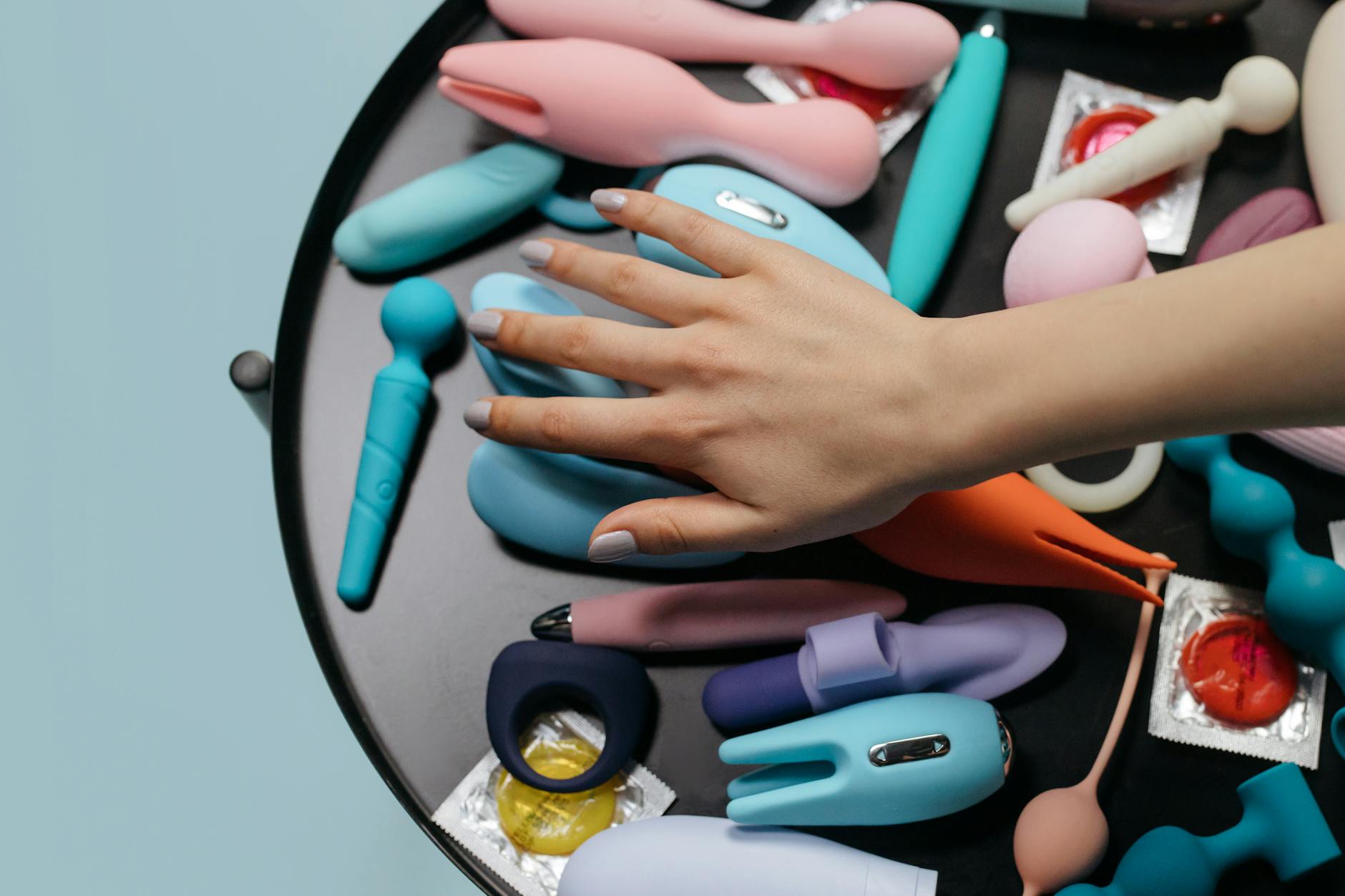
The thing nobody tells you about desire after kids
Let's be real. Parenthood rewires your nervous system. You spend years in survival mode, managing other people's needs, bodies, and moods. Touch becomes transactional. A hand on your shoulder reads as a demand for something, not an offering. Your own pleasure feels like a luxury item you can't quite afford.
Then one day your kid is finally asleep and you realize you have no idea what your own body actually wants anymore.
Why disconnection from pleasure is actually normal
This isn't a relationship failure. It's neurobiology. When you're in active parenting mode, your brain is hyperalert to your children's needs. That's oxytocin and cortisol, not a character flaw. Your amygdala is working overtime. Your prefrontal cortex, the part that handles pleasure, creativity, and connection to yourself, takes a back seat.
Adding to that, your touch tank is already full. By the time your partner approaches, you've been touched out by kids clinging, climbing, needing. The idea of more touch sounds exhausting, not intimate. Many people I work with describe it as "touched to death by 8 p.m."
The irony is that solo pleasure is actually the fastest way back to being present with a partner. It's not selfish. It's the opposite. It's reconnecting with the part of you that isn't anyone's mother or partner yet. That's the part that remembers desire.
How lemon vibrators fit into reclaiming sensation
A lemon clitoral vibrator works differently than you might expect. The suction-based design of lemon sexual toys doesn't feel like pressure or friction. It feels like a gentle rhythm that builds awareness without demanding anything from you.
Here's what's practical about it: you don't have to be aroused to start. With a lemon vibrator, sensation comes first. Arousal follows. That's the opposite of what you remember from before kids, when your brain would light up and your body would follow. Now your body needs permission to wake up. The Lem gives it that signal.
The gentle pulsing patterns, especially the lower settings, feel more meditative than performance-oriented. You're not chasing an orgasm. You're remembering what sensation feels like when nobody needs anything from you.
The timing piece that actually works
Parents often think they need a long stretch of time. You don't. Ten minutes of solo time with a lemon clitoral vibrator does more for your nervous system than an hour of pressured partnered sex where you're performing arousal.
Honestly, the best time is when you have maybe fifteen minutes. Post-shower when your mind is slightly elsewhere. Early morning before the house wakes up. Late evening after everyone's asleep and you're not expecting to transition into partnered time. The point is autonomy. You choose when, how long, what intensity.
Start with pattern 1 or 2 on a Lem vibrator. Low stimulation. You're not trying to achieve anything. You're just noticing what feels good on your own terms. Many parents describe the first time back as almost meditative. Like remembering a language you haven't spoken in years.
What happens next matters as much as the session itself
After ten minutes with a lemon clitoral vibrator, notice what shifts. Not whether you orgasmed. Notice if your shoulders are less tense. If you feel slightly more present. If you remember you exist separately from the role you're playing.
Don't immediately tell your partner or turn it into couple's time. This is yours. Keep it. Let it build. Over a few weeks of solo time, something subtle changes. Your nervous system starts to remember that pleasure is possible. Your touch tank stops feeling like it's already overflowing. Your ability to be present actually increases.
I've seen this pattern repeatedly with parents. Once they stop performing desire for anyone else and reconnect with their own, partnership becomes easier, not harder. Because you're not coming to it depleted. You're coming to it having already remembered that you're a sexual person separate from your parenting role.
How to talk about it (if you want to)
Many people using a lemon vibrator for reconnection don't immediately tell their partner. That's fine. You don't owe anyone a play-by-play of your solo exploration.
If you do want to share it eventually, don't frame it as a problem to solve. "I've been using a lemon vibrator and it's helping me feel more connected to my own body" is radically different from "I'm not interested in partnered sex right now." One is additive. The other sounds like rejection.
If a partner gets defensive about a lemon sexual toy, that's worth investigating separately. Sometimes it's about insecurity. Sometimes it's about him feeling like he should be enough. Neither is something a vibrator solves. But a vibrator absolutely helps you figure out whether the issue is actually disconnection or something else entirely.
The longer game: reconnecting with your partner
Here's what I see happen. A parent uses a lemon clitoral vibrator solo for a few weeks. They feel less touched out. Their nervous system settles. Then, almost accidentally, partnered intimacy becomes interesting again. Not because anything changed in the relationship. Because you changed. You're no longer operating from depletion.
Some couples find that inviting a Lem into partnered time helps. Not as a replacement, but as something that lets you relax differently. The suction-based design means you're not just receiving penetration or friction. You get a completely different sensation that your partner can't replicate. That novelty alone can shift the energy.
Others keep it completely separate. Solo time is solo time. Partnered time is partnered time. Both matter. One doesn't replace the other.
The common thread is that people who reconnect with their own pleasure first consistently report better intimacy with partners. Not because the vibrator is magic. Because you can't offer presence and desire if you've spent three years offering neither to yourself.
When to actually expect to feel different
Don't expect an orgasm the first time. Don't expect instant reconnection. Expect maybe a subtle loosening. A five-minute window where you're not thinking about what you forgot to do. That's the baseline. Keep going.
Most people I work with report meaningful shifts after two to three weeks of consistent solo time. Not dramatic ones. Just a gradual sense that touch feels less threatening. That your body is yours again, not a resource to manage.
Some experience it faster. Some take longer. The pressure to feel something is half the problem. Let it be boring at first. Boredom is actually good. It means you're not performing.
When you might need additional support
If touching yourself, or being touched, actually causes pain or extreme anxiety even after a few weeks, talk to a therapist. Sometimes postpartum bodies need that support. Sometimes emotional stuff about your own mother and touch needs unpacking. A lemon vibrator helps, but it's not a substitute for talking to someone.
Same if you've completely lost desire and a few weeks of solo time doesn't shift anything. That could be hormonal. Could be depression. Could be relationship stuff. A vibrator is a tool for reconnection, not a diagnosis.
The thing about adult toys and parenting
There's no moral superiority in using lemon sexual toys or clitoral vibrators as a parent. But there is practical value. When your body and mind are touched out, when you feel erased by the role you're playing, reconnecting with solo pleasure isn't indulgent. It's how you remember you're a whole person.
Parenthood lasts a long time. Your sexuality lasts even longer. Those two things don't have to be in conflict. But they will be if you spend years pretending you don't have a body separate from what you're managing for other people.
A lemon vibrator is just an object. But it's an object that signals to your nervous system: this time is for you. This sensation is yours. You're allowed to feel good in your own body.
That permission might be the thing you actually need more than the vibration itself.
FAQ
How often should I use a lemon vibrator if I'm trying to reconnect with pleasure?
Start with twice a week, even just for ten minutes. Consistency matters more than duration. Your nervous system needs the signal that pleasure-seeking time is regular and safe. After a few weeks, you'll intuitively know if you want more or less.
Can I use a lemon clitoral vibrator if I feel numb or disconnected from sensation?
Yes. Actually, that's exactly when they help most. The suction stimulation can wake up nerves that feel dormant. Start at the lowest pattern and build slowly. Numbness often softens with consistent, gentle stimulation over weeks, not immediately.
What if my partner feels threatened by me using a lemon sexual toy solo?
That's a conversation, but not one the vibrator should mediate. Ask him what specifically bothers him. Is it that you have something separate from him? That you're receiving pleasure he didn't provide? That he fears you'll prefer it? Those are relationship questions that need direct talking, not vibrator negotiation. A good partner wants you to feel good in your own body.
Is it weird to use a lemon vibrator if you have kids in the house?
Not weird. Practical. Lock the door, use it when they're asleep or at school. Keep it in a discreet place. Kids don't need to know about your adult toys, just like they don't need to see you naked or in sexual situations. You're entitled to a private body even in a full house.
If I orgasm with a lemon vibrator solo, will partnered sex feel less intense?
Often the opposite. Solo orgasms actually train your nervous system to recognize pleasure. That knowledge carries into partnered time. You're not waiting for someone else to give you sensation. You're meeting them from a place where you know what feels good. That's not threatening to good partners. It's attractive.
How do I know if using a lemon clitoral vibrator is actually helping my disconnection or just a distraction?
Notice the patterns. After a few sessions, are you less irritable with your partner? More able to be touched without flinching? Slightly more interested in intimacy, even if it's small? Those are shifts. If after a month you feel exactly the same and haven't wanted to be near your partner any more, it's probably not a vibrator problem. It might be something deeper that needs talking through or professional support.
Moving forward
Parenthood doesn't have to permanently disconnect you from your own pleasure. But it usually requires you to be intentional about reconnecting. A lemon vibrator is one tool for that. Not the only one. But a remarkably effective one, especially for people who've spent years in service to everyone else's needs.
Start small. Ten minutes, low intensity, no expectations. Let your body remember that pleasure is possible when you're the only one responsible for it. From there, everything else becomes easier.
If you're struggling with reconnecting to your own body or to your partner after parenthood, that conversation matters. Reach out to talk through what you're experiencing. Sometimes the permission to explore this matters as much as the tool itself.