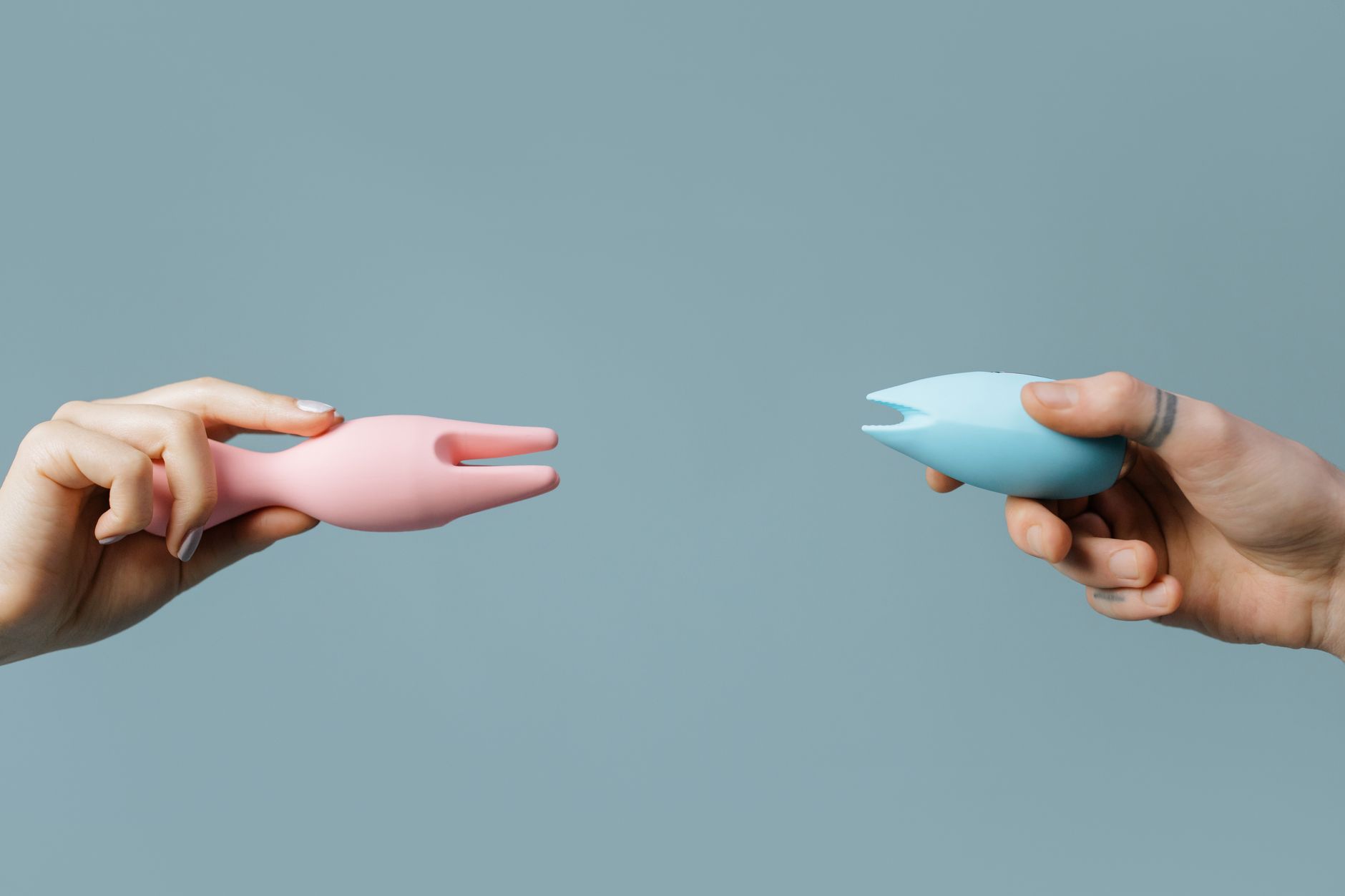
How to Use a Lemon Vibrator With Your Partner After Long-Distance Reunion
Months apart changes how your bodies respond to each other. A relationship coach on rebuilding physical confidence, managing reentry anxiety, and why sensation tools matter more than you think.
You've been texting for months. Maybe video calls. Maybe not much at all. Then suddenly you're in the same room again, and your body doesn't quite remember how to do this. That's not a failure. That's completely normal physics.
When you're physically separated for weeks or months, your nervous system recalibrates. The sensory memory of your partner's touch fades. Your pelvic floor tightens. Arousal feels sluggish because your brain hasn't practiced the neural pathway in a while. Some people experience anxiety about whether attraction is still there. Others feel completely numbed out, which triggers panic. Both are real, and both are fixable.
This is where a lemon clitoral vibrator becomes genuinely useful. Not as a replacement for reconnection, but as a bridge back to sensation, confidence, and the ability to feel pleasure together again.
Let's start with the neuroscience. Your brain learns through repetition. When you're physically intimate regularly, your nervous system becomes primed to respond to your partner's touch, voice, and presence. It's not romantic mystique. It's pattern recognition.
After months apart, that priming resets. Your body doesn't automatically flood with the same hormones at the sight of your partner. Your pelvic floor may feel tighter, especially if you were anxious about the reunion or grieving the distance. Some people experience involuntary tension, others numbness. The clitoris still works, but the pathway to arousal can feel longer.
Hormonal shifts also happen. If you were stressed during the separation, cortisol suppressed desire and responsiveness. Your body was in conservation mode. Reunion doesn't instantly flip that switch.
A lemon vibrator works here because it bypasses some of the performance pressure. The air-suction stimulation activates sensation in a way that doesn't depend on your partner's timing or your own arousal being "correct." It retrains your nervous system to feel pleasure without expectation.
Long-distance relationships create a particular kind of vulnerability when you reunite. There's often a narrative running underneath: "Will they still find me attractive? Will I feel the same spark? What if my body doesn't respond the way it used to?"
These thoughts kill arousal faster than anything else.
When you introduce a lemon vibrator together, you're doing several things at once. You're removing the pressure for your partner to "make" you aroused. You're creating a shared experience rather than a solo performance. You're also normalizing the idea that reconnecting takes a minute. Some couples I work with find that using a clitoral vibrator together actually reduces shame around needing physical help to rebuild sensation.
The conversation matters too. "I want to use this with you, not instead of you" is different from "I can't orgasm without this now." The first invites collaboration. The second sounds like a problem to fix.
Start with realistic expectations. This is not the time to try a new three-hour session or position you've only fantasized about. Your bodies need to remember each other first.
Here's what I recommend to couples in reunion mode:
Give yourself real time. Don't jump into anything on arrival day if you're jet-lagged or emotionally flooded. Let your nervous systems settle for a few hours, maybe overnight. Genuine reconnection works better with rest.
Start with extended foreplay. This isn't lazy. This is neurological homework. Spend 20-30 minutes on skin contact, kissing, and slow touch before you introduce a vibrator. Your body needs that priming.
Introduce the lemon vibrator as an addition, not a pivot. Use it after you've built arousal together. Start on a lower setting (pattern 1 or 2). The stimulation should feel like enhancement, not rescue.
Communication is not optional. "Does this feel good?" "Want me to try a different pattern?" These questions matter because your partner's body has changed too. What used to work might feel too intense now. Sensitivity shifts after time apart.
Some couples find that being together again actually increases anxiety rather than relieving it. "What if this doesn't work?" becomes a real question in the room.
Here's what I tell people: the lemon vibrator is permission to not have a perfect first time back. If you're using it, you're signaling that you're both in this together and willing to work with your actual bodies, not some fantasy version.
If your partner resists using a vibrator, that's information too. It might mean anxiety about his or her own performance, or discomfort with the device. These conversations are worth having before you're both naked and vulnerable.
If you're the one with hesitation, sit with that honestly. Is it shame about needing help? Fear that your partner will judge you? Worry that it means something is wrong? A good partner understands that reconnection is work. Using tools to bridge that gap is wisdom, not failure.
Your body doesn't return to full baseline immediately. Some clients report that it takes two to four weeks of consistent physical contact to feel fully "back." That doesn't mean you can't have good sex before then. It means your nervous system is still recalibrating.
Week one is often about relief and tenderness. Sex might feel shorter, more emotional, less physically intense than before.
Week two is when some couples start to feel the old rhythm again. Arousal builds more naturally. The lemon vibrator becomes optional rather than necessary.
Week three onward, your body usually remembers. Sensation deepens. The pressure lifts.
Your timeline might be different. Stress, health, medication, and relationship dynamics all play a role. The point is to be patient with the process rather than shocked by the "inefficiency."
Wand vibrators deliver direct mechanical vibration. They work, but they require more active participation and can feel clinical if you're already anxious about performance.
Lemon clitoral vibrators use air-suction technology, which means the sensation is distributed across a wider area rather than pinpoint. This creates a gentler, less intense feeling that's actually easier for reconnecting bodies to process. It also has a cumulative effect. You can use it longer without overstimulation.
For couples specifically, the lemon vibrator is also quieter, smaller, and less intimidating than a wand. It doesn't require as much positioning negotiation.
Once you've used a lemon vibrator to rebuild initial reconnection, it doesn't have to disappear from your intimate routine. Many couples find it stays part of their regular toolkit, especially if they travel frequently or have periods of separation.
Some use it weekly. Others reach for it during high-stress periods when arousal drops. A few find that the ritual of using it together becomes a form of foreplay they genuinely enjoy.
The goal is never dependence. The goal is comfort, communication, and the actual capacity to feel pleasure with your partner again. A good tool serves that, then steps back.
Two to four weeks is typical for most couples, assuming regular physical contact and low stress. Some people feel baseline sooner. Others need more time, especially if the separation was very long or emotionally difficult. There's no universal timeline. Your body will signal when sensation is returning to normal.
Wait a few days if you can. Let your bodies adjust to being in the same space again without the pressure of sexual performance. Once you've had some reconnection sex and the initial anxiety has settled, a clitoral vibrator can bridge the gap if sensation feels slower than expected. Rushing into it can actually increase pressure.
This is worth a separate conversation, ideally before you're both naked. Ask specifically what the discomfort is. Is it about his or her own insecurity? A belief that vibrators are "cheating"? Worry that it means something is wrong? These are different problems with different solutions. A marriage coach or therapist can help navigate this if it feels stuck.
Absolutely. Sometimes couples reunite and realize the relationship has changed. Using a vibrator doesn't fix misalignment, but it also doesn't hide it. You'll still know whether you want to be together. What the tool does is prevent temporary numbness from being mistaken for lack of connection.
As often as feels right. Some couples use it every time. Others use it occasionally to rebuild sensation during a particular week, then move on. There's no rule. The point is that it should feel optional and pleasurable, never obligatory or clinical.
Tools can't fix every barrier. If reconnection feels persistently numb, anxious, or disconnected after a few weeks, that might signal something deeper. Relationship therapy can help identify whether the issue is emotional distance, unresolved conflict, or something specific to physical reconnection. A good therapist can work with both of you on rebuilding intimacy intentionally.
Long-distance reunion is a real transition. Your body has been in storage mode. Your partner has too. Using a lemon clitoral vibrator together isn't a shortcut. It's a practical acknowledgment that your nervous systems need help recalibrating. With patience, communication, and the right tools, reconnection gets easier. Your body remembers your partner. It just needs a little runway.