Here's what no one tells you about pleasure and trust
Your body knows something your brain hasn't caught up to yet. When emotional intimacy is missing, arousal doesn't just feel harder to find. It vanishes. Your nervous system downregulates, your pelvic floor tightens, and suddenly nothing works the way it used to. This isn't a sex problem. It's a safety problem.
I work with couples and individuals where physical pleasure has completely flatlined, and ninety percent of the time, the issue isn't mechanical. It's relational. Your body is not malfunctioning. It's protecting you.
Why emotional distance kills arousal
Arousal requires vulnerability. Your nervous system has to believe it's safe to open up, literally and figuratively. When there's emotional distance in a relationship, unresolved conflict, or a persistent feeling of not being seen, your brain sends a clear signal: now is not the time to be vulnerable. Now is the time to defend.
This happens even if you intellectually want to feel pleasure. Your nervous system doesn't care what you think you should want. It's running on a deeper operating system.
I see this pattern constantly. Partners come in saying things like, "We had sex, but I felt nothing," or "I faked it because the emotional distance made real arousal impossible." They're not broken. Their bodies are doing exactly what they're supposed to do.
The practical problem
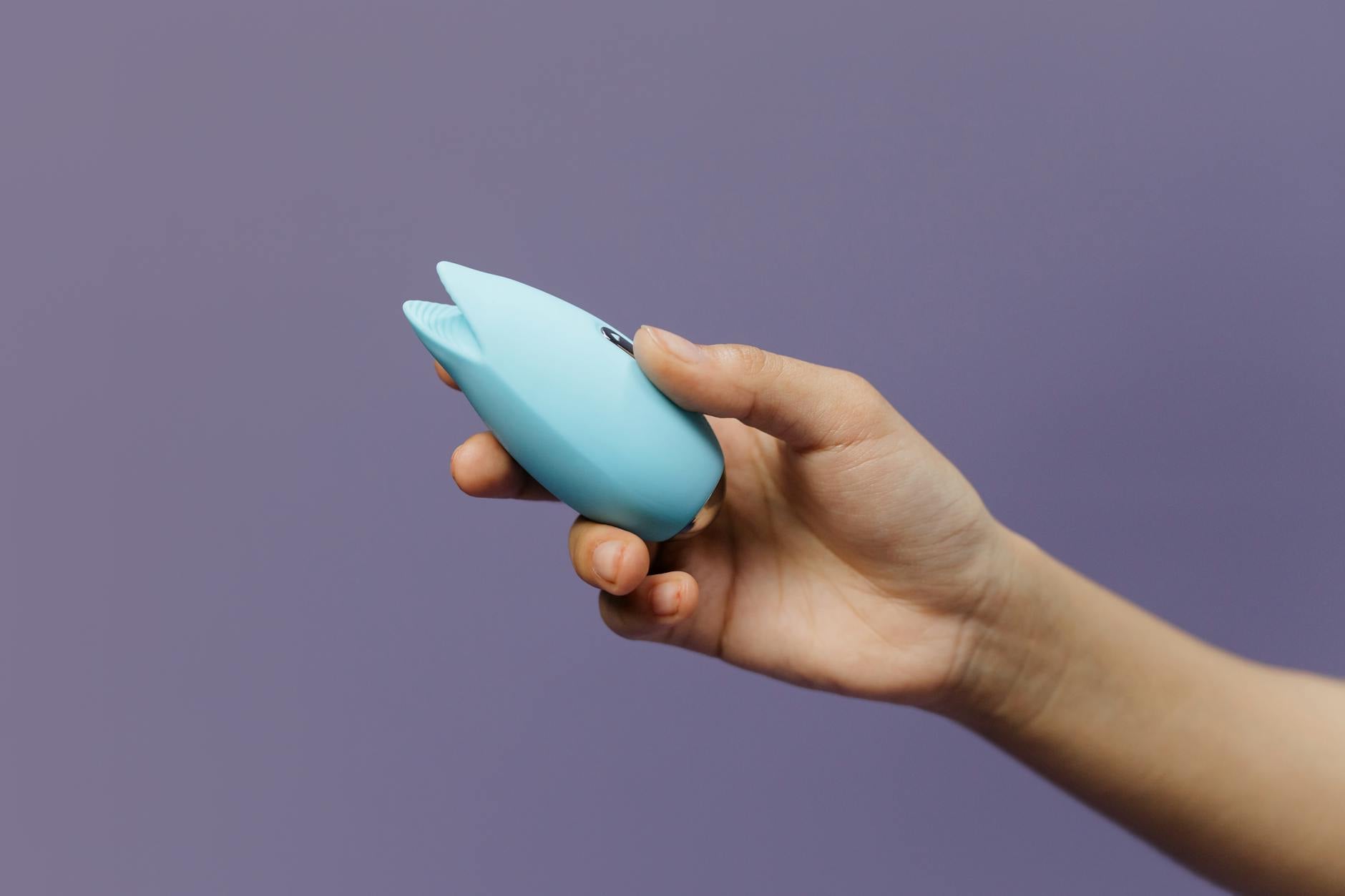
When emotional intimacy is absent, even the best tools can feel pointless. A lemon vibrator, or any clitoral vibrator, is designed to create physical sensation. But sensation requires your nervous system to be in a receptive state. If you're in a state of protection, even the gentlest suction won't crack through.
So what do you do?
Start with solo exploration, not partnered performance
If emotional distance is the block, using a lemon vibrator solo is often the most honest place to start. This isn't about being selfish. It's about reclaiming the signal between your body and your brain.
When you're alone, you remove the relational weight temporarily. You're not performing for someone else's timeline or preferences. You're not managing their feelings about your pleasure. This creates enough space for your nervous system to relax.
Start here. Spend time with lemon clitoral vibrators without an agenda. No pressure to orgasm. No expectation of what arousal should feel like. Just sensation.
Many people find that solo pleasure returns quickly once they remove the emotional friction. That's valuable information. It tells you the problem is relational, not physical. Your body still works. It just didn't feel safe with your partner.
Build your own arousal literacy first
Before you bring this back into a relationship context, you need to understand what your arousal actually needs. Use time with a vibrator to notice patterns.
Are you more responsive to suction (like the Lemon Vibrator's signature suction stimulation) or direct vibration? Do you need mental space, specific fantasies, or just time? How long does genuine arousal take when you're alone versus when you're with your partner? What's the difference between performing arousal and actually feeling it?
These answers matter because they'll inform what you need from a partner to feel safe enough to be aroused again.
The conversation you need to have
Honestly though, you can't rebuild emotional intimacy with a vibrator. You can understand your own pleasure while you're rebuilding it with a partner, but the core work is relational.
This is the hard part. If there's emotional distance, it needs to be named and addressed. Not during sex. Not while trying to use lemon adult toys together. When you're both clothed, grounded, and not trying to perform anything.
The conversation sounds like: "I notice I'm not feeling desire or arousal with you right now. I want to understand what's happening between us that makes my body feel unsafe." Notice this is not blaming. It's describing your nervous system's response.
Many couples find that when they address the emotional rupture, arousal returns on its own. Others need more time, or the help of a couples therapist who specializes in intimacy. Both are completely normal.
When you do bring the vibrator back in
If you and your partner are actively rebuilding emotional connection, using a clitoral vibrator together can be part of that process. But timing matters.
Wait until you've had a few conversations where you actually felt heard. Wait until you've done something vulnerable together that wasn't sexual. Wait until you can look at each other without that underlying current of distance.
When you do bring lemon sexual toys into that space, frame it as exploration, not performance. "I'd like us to try this. I'm curious about what feels good. It's not about you doing something right or wrong." This removes the pressure and invitation judgement.
Many partners are relieved. They've been feeling the distance too, and having permission to explore something together feels like permission to reconnect.
What rebuilding looks like in practice
One pattern I see that works. You spend solo time with the vibrator while your partner doesn't know. You rediscover what arousal feels like when you're safe. Then, you bring your own arousal into the relationship.
This is different from performing. You're showing your partner what your pleasure actually looks like. You're inviting them in, not demanding they create something from nothing.
The vulnerability here is real. You're saying, "This is what my body needs to feel good." Some partners respond with curiosity and generosity. Others respond with defensiveness or withdrawal. That response matters. It tells you whether this person is willing to prioritize your pleasure and safety.
The role of lemon vibrators in this process
Clitoral vibrators like those from Lemon Vibrator are particularly useful here because they bypass some of the performance anxiety. They're not dependent on your partner's skill or timing. The suction technology creates consistent, predictable sensation. Your body can relax into that in a way that might feel impossible with touch alone when there's relational distance.
Use them as a tool for understanding your own response, not as a replacement for addressing what's actually wrong.
When to get help
If you're using a vibrator solo and still feeling nothing, or if the emotional distance in your relationship feels unfixable, that's time to call a therapist. A couples therapist can help you determine whether this distance is a solvable rupture or a sign that the relationship isn't meeting your needs.
If you're single or your partner is uninterested in rebuilding, a sex therapist or somatic therapist can help you reconnect your body to pleasure on your own terms. This is real clinical work. It's worth investing in.
The honest truth
So many people assume that if they just find the right vibrator or the right technique, the arousal problem will solve itself. It won't. The vibrator is only useful if your nervous system believes it's safe to feel pleasure. If emotional intimacy is missing, no amount of lemon sexual toys will fix that.
But once you address the relational piece, a quality vibrator becomes genuinely transformative. Your body will remember how to respond. Your pleasure will return. And it might be even deeper than before, because you'll have learned to ask for what you actually need.
Frequently asked questions
How long does it take for arousal to return after emotional distance?
It varies wildly depending on the depth of the rupture and how actively you're rebuilding. Some couples feel a shift in a few weeks of real conversation. Others need months or therapeutic support. There's no timeline. What matters is whether both people are genuinely engaged in reconnecting.
Can I use lemon vibrators while I'm rebuilding emotional intimacy with my partner?
Absolutely, but solo first. Give yourself time to rediscover your own arousal in a safe space. Then, if your partner is willing, bring them in. The vibrator becomes a bridge, not a solution.
What if my partner feels threatened by me using a vibrator?
That's a separate conversation worth having. A partner's defensiveness about your pleasure is worth examining. It might signal their own insecurity, or it might signal that you're not actually safe with them. Either way, it's information.
Is it normal to feel nothing even with the best clitoral vibrator if there's emotional distance?
Completely normal. Your nervous system is prioritizing safety over sensation. The vibrator can help you rebuild sensation once you feel safe, but it won't bypass genuine emotional rupture.
What if the emotional distance isn't something we can fix as a couple?
Then you have important clarity. Some relationships end because the emotional rupture is too deep or because one person isn't willing to do the work. That's painful, but it's also honest. You deserve to be with someone who prioritizes your safety and pleasure.
How do I know if my pleasure block is emotional or physical?
Use solo time to find out. If you can feel genuine arousal and sensation alone, but not with your partner, the block is relational. If you feel numb both alone and with a partner, there might be a physical component worth exploring with a doctor or sex therapist.