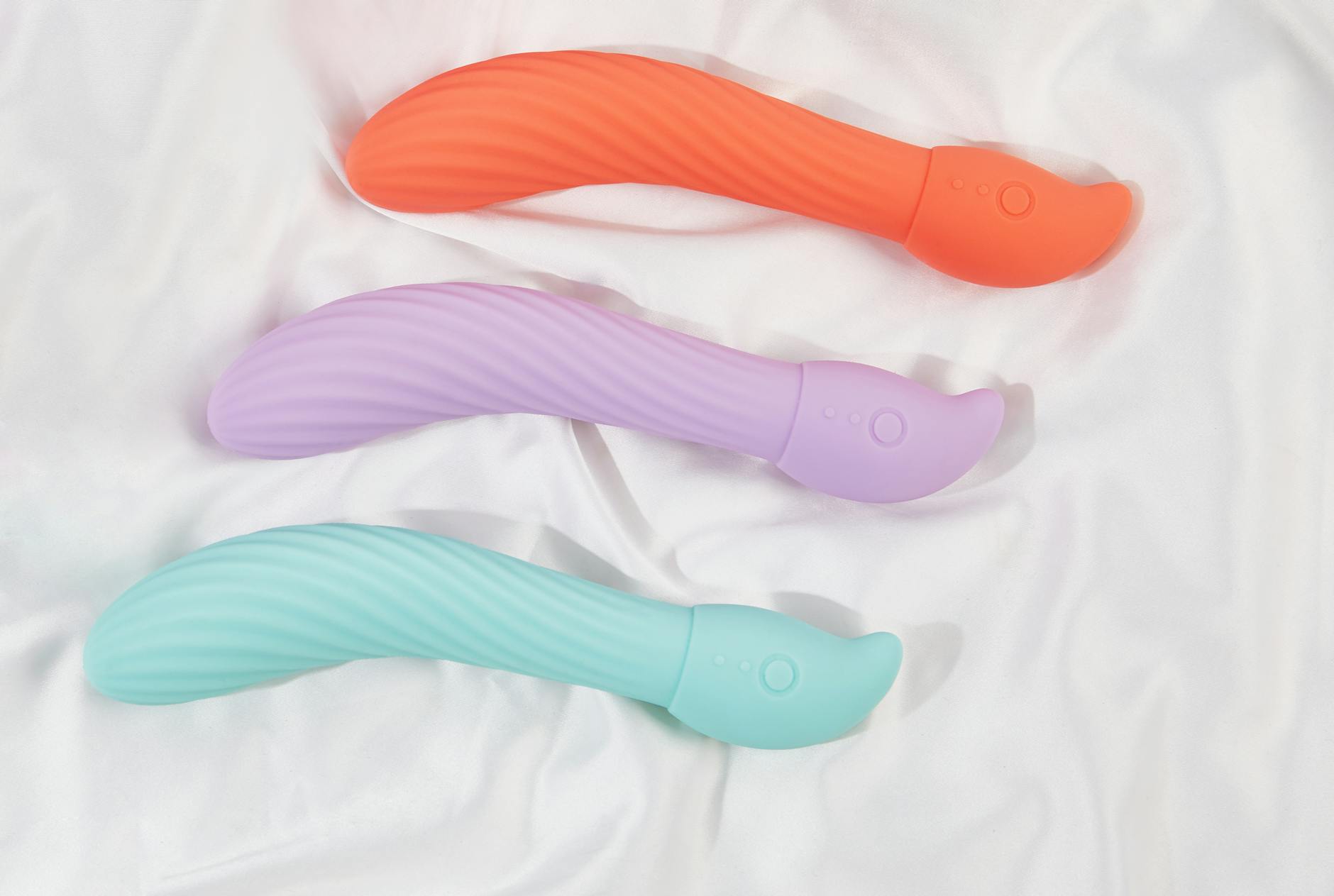
The thing nobody tells you about bringing toys into partnered sex
Here's the part that catches people off guard: it's not actually about the toy. It's about permission. When you introduce a lemon vibrator or any clitoral vibrator to partnered sex, you're not really asking "do you want this inside our bedroom." You're asking "is my pleasure important enough to talk about out loud."
That's why so many people freeze before the conversation even starts. It feels bigger than it is.
Why the lemon vibrator specifically
A lot of partners feel threatened by vibrators because they assume the toy is replacing them. This anxiety gets worse with wand vibrators, which scream "professional-grade" in the worst way. The lemon vibrator and other air-suction clitoral vibrators are different because they mimic a sensation your partner can't create with their hands. They're not a replacement. They're an amplifier.
Your partner's touch feels good. A lemon vibrator makes that good feeling more intense, more focused, and for many people, more reliably orgasmic. That framing matters when you start the conversation.
The other reason lemon vibrators are easier to introduce is the design. They look less clinical than traditional vibrators. They're compact, visually less intimidating, and you can actually use them together in partnered sex without acrobatics.
The three timing categories
Bad timing: mid-sex, in the moment, as a surprise. Your partner is already in a state where their brain is offline. Springing a toy on them feels like ambush.
Awkward timing: out of nowhere, sitting on the couch on a Tuesday. "So I was thinking..." This opens the conversation cold. It works, but it requires more emotional scaffolding.
Good timing: during a conversation about sex that's already happening. After sex when you're both relaxed. During a "what would you want to try" conversation. After reading an article together. These moments already have permission built in.
The best timing is when you've recently had good sex, you're both in a good mood, and there's no performance pressure. Bring it up casually: "I read this thing about couples using vibrators together and I got curious." You're naming it, but you're not making it heavy.
The script that actually works
Honestly though, there's no perfect script because every partnership is different. But here's the shape of what works:
Name the desire without naming the problem. "I've been thinking about ways to feel more intense pleasure when we have sex." Not "I'm not satisfied" or "something's missing." You're talking about expansion, not deficit.
Make it about both of you. "I think it could be really hot to try together." Not "I want to get this for myself." Partnered sex is a shared experience. The vibrator serves that.
Give them information, not pressure. "It's a clitoral vibrator called the Lem. It works with suction instead of vibration, which feels really different. I found research that shows couples who introduce toys actually report feeling more connected, not less." Knowledge dissolves anxiety. Pressure creates defense.
Make an exit visible. "If you're not into it, that's totally fine. I'm not pushing. I just wanted to ask." This matters more than anything else. When your partner knows they can say no without disappointing you, they're more likely to stay curious instead of shutting down.
The whole conversation takes maybe two minutes. You're not having a summit meeting. You're naming something you want and giving your partner space to respond.
What happens if they say no
First, don't argue. Don't over-explain or try to convince them. A "no" at this stage is usually about anxiety, not actual objection. Common fears: "I won't be enough," "it's weird," "I don't know how to use it," "what if I accidentally hurt you."
Those are all solvable. Ask one question: "What's making you hesitant." Then listen. You're not trying to change their mind. You're gathering information.
If it's about not knowing how to use it, offer to show them. If it's about inadequacy, it's time for the bigger conversation about what you each bring to sex. That might take longer than one night. That's okay.
You might decide to use the vibrator alone first. That removes the performance aspect. Once they see you using it, see how much you enjoy it, the defensiveness often softens. Then the conversation shifts from "do you want this" to "can I try this with you sometime."
If they genuinely refuse and won't budge, you have a bigger relationship question to work through. That's not about the toy. That's about whether you both feel able to ask for what you want. A good couples therapist can help with that.
The first time using it together
Don't plan a whole production. The pressure to make it "special" often kills the experience. Instead, integrate it naturally into sex you're already having.
When you're ready, you might say "want to try the Lem now." If they do, start with lower intensity settings. The lemon vibrator has multiple patterns, and beginners often jump to high settings thinking "more intensity equals better." It doesn't. Slow builds feel better than shock.
Your partner can stay inside you, or beside you, or watch. All positions work. The point is they're present and engaged. If it feels good, great. If it doesn't, you stop and try again another time. The first time isn't a referendum on whether this will work forever.
After sex, before the emotional logic kicks back in, ask: "How did that feel." Not "Did you like it." How it felt opens conversation. Did it like/dislike judgment.
Why this matters beyond the toy
Introducing a lemon vibrator into partnered sex does something bigger than just making sex feel better. It teaches you both that you can ask for what you want, and your partner will listen. It teaches you that pleasure is worth discussing. It proves that wanting something new doesn't mean you're rejecting what's been working.
Those skills transfer everywhere in the relationship.
Couples who can talk about sex openly report higher satisfaction in the relationship overall. Not because the sex is better. Because they've built a channel for vulnerability. Once that channel exists, you use it for everything.
A lemon vibrator is just the delivery mechanism. The real thing you're introducing is permission.
Common questions
Should I ask permission before buying it? Yes. Buying it without asking and presenting it as a surprise feels controlling, not romantic. Asking first means they get to be part of the choice.
What if they want to use it and I don't? That's fine. It's their body. You can be present, supportive, and not participate directly. Not all sex acts need to involve both partners in the same way.
Is it weird if my partner wants to use the vibrator more than I do? No. Everyone's body is different. Some people get off faster with external stimulation. Some people need it to orgasm during partnered sex. Neither is weird or wrong.
How do I know if they actually like it or if they're just pretending? Watch their body, not their words. If they're tensing up, quieting down, or pulling away, something's off. Ask. If they relax, get louder, or move into it, they're genuinely enjoying it.
Can we use it during partnered sex, or is it just a solo thing? Definitely during. That's actually where many people find it hottest. Your partner can watch, or touch you while you use it, or use it with their hand while you're together. Lots of options.
What if I've been using a clitoral vibrator alone and now I'm embarrassed about it? Don't be. Most people use toys solo. Your partner probably suspects. Once it's out in the open, the shame usually dissolves fast.
The real ending
Introducing a lemon vibrator to your partnership isn't a test of your relationship. It's an invitation. An invitation to explore pleasure together, to ask for what you want, and to believe that your partner will say yes more often than no. Most partners do say yes, once they understand it's not a referendum on them. It's an expansion. And expansion is something most couples want, if they can just get past the first conversation.
You've got this.