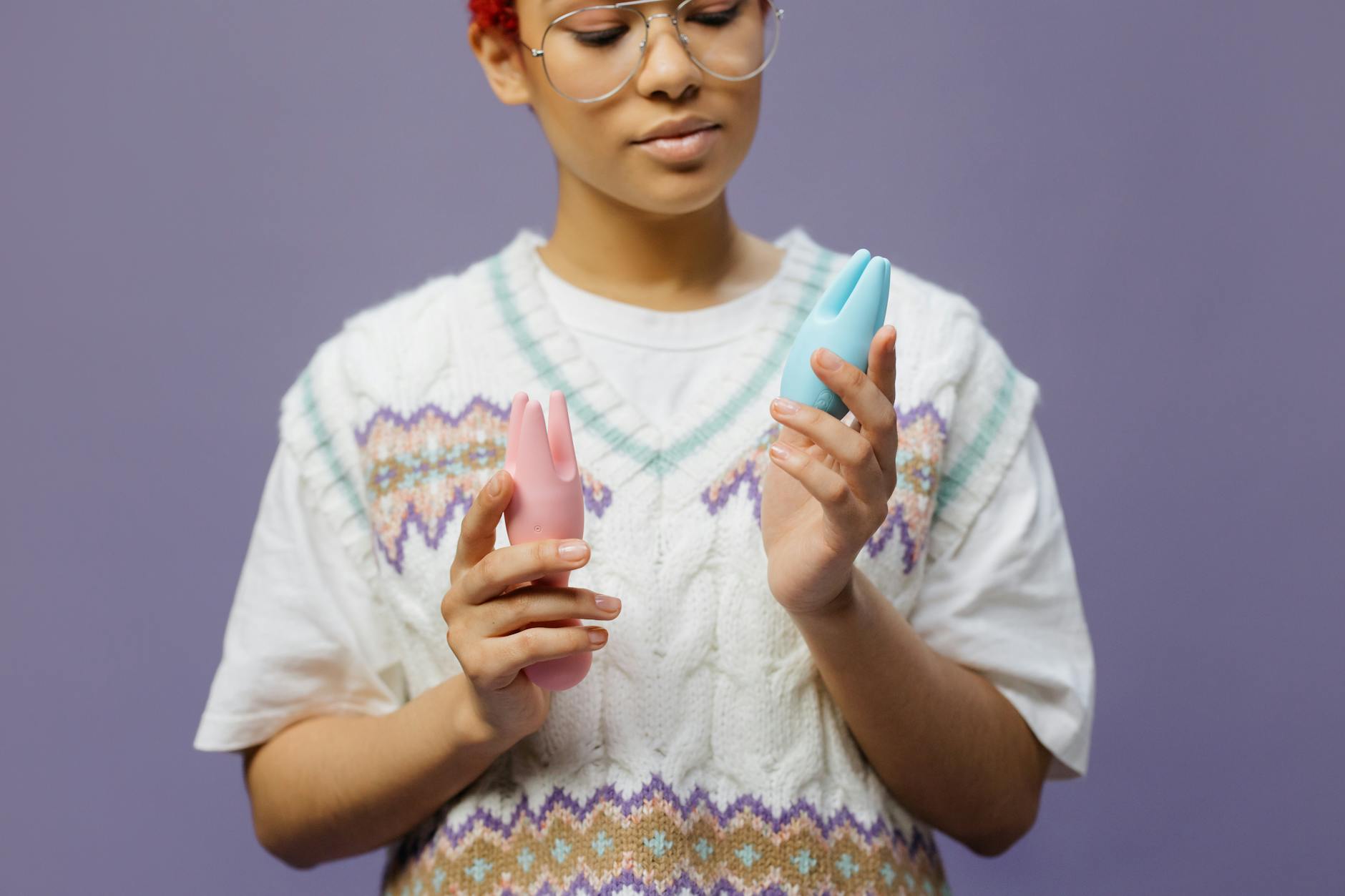
Let's talk about your cycle and pleasure
Honestly, nobody tells you this part: your clitoral vibrator experience is radically different depending on where you are in your cycle. The same lemon vibrator that felt incredible on day 12 might feel like too much on day 22. That's not a problem with you or the toy. That's basic biology that has nothing to do with being broken.
I work with people all the time who think their lemon sucker isn't working, when really they're just using it at the wrong time of the month for their body's current state. Once they understand the rhythm, everything shifts. Pleasure goes from confusing to actually predictable.
The menstrual phase: lower sensation, higher patience required
Days 1-5 (roughly). Hormone levels are at their lowest. Estrogen and testosterone are dropping, which means blood flow to the clitoris is reduced and tissue sensitivity isn't at peak. This doesn't mean no pleasure is possible. It means your body needs something different.
What I tell people: think of this phase as the "patient" window. Your clitoris isn't as eager to respond, so the lemon vibrator technique changes. Lower intensity settings actually feel better now. Start at setting 1 or 2 on your lem vibrator instead of your usual 3 or 4. Give yourself longer warm-up time, maybe 20-30 minutes of foreplay or self-touch before introducing the clitoral vibrator. Your body isn't lazy. It's just asking you to slow down.
Lubrication might feel different too. Some people find they need less during menstruation (the body is naturally more lubricated), but others need more because sensation is duller. If penetration happens alongside clitoral vibration, water-based lube is your friend here.
One practical note: many people avoid pleasure during their period based on old shame. You absolutely don't have to. Orgasms actually help cramps. If you want to use your lemon sexual toy during menstruation, use it.
The follicular phase: building sensitivity and arousal ease
Days 6-13 (roughly). Estrogen starts climbing. This is when blood flow to your genitals increases, tissue sensitivity sharpens, and arousal itself becomes easier to access. The follicular phase is often when people report being able to orgasm faster and with less effort.
Your lemon clitoral vibrator will feel noticeably different here. The same intensity that felt gentle last week might feel more intense now. Sensation is heightened. This is also when the clitoris is becoming more engorged and responsive, so you might notice that suction-based stimulation feels particularly good right now.
This is the phase to experiment. Try higher intensity settings. Try longer sessions. Try using your lemon sucker in ways you haven't before. Your nervous system is wired for pleasure right now, and your body's capacity to feel and enjoy is at or near its monthly peak. This is when people often discover new sensations or reach orgasm in ways they haven't managed before.
The follicular phase is also typically when desire spikes. If you share pleasure with a partner, this is often when partnered sex feels most natural and exciting. If you're solo, this is your permission window to be ambitious.
Ovulation: peak sensitivity and strongest response
Days 14-15 (roughly). Testosterone and estrogen are both high. This is the sweet spot for sensation. Your clitoris is maximally engorged. Arousal happens fastest. Orgasms tend to feel strongest.
This is when most people report their best experiences with lemon vibrators. The suction stimulation hits differently. Intensity that felt strong a week ago might feel just right now. Some people who struggle to orgasm find that ovulation is when it actually becomes possible.
Honestly, if you're going to test drive a new clitoral vibrator or try a new technique, ovulation is your moment. Your body is telling you yes in every way. Trust that.
The luteal phase: patience returns, intensity matters less
Days 16-28 (roughly). Progesterone rises. Estrogen dips again. This is when sensitivity starts declining, and this is also when mood and stress hormones shift. The luteal phase is often when people experience lower desire, shorter fuses, and a need for different kinds of touch.
With lemon adult toys during the luteal phase, expect to need similar adjustments as you did during menstruation. Longer warm-up. Lower intensity settings initially. More lube, typically. But here's what's different: the luteal phase is often emotionally or relationally charged. If you're partnered, this is when communication about pleasure actually matters more. Stress is higher. Patience for clumsy technique is lower.
This is not the phase to expect peak pleasure experiences. It's the phase to be gentler with yourself and your expectations. A satisfying experience during the luteal phase might look like slow, deliberate stimulation with a partner or with yourself. It might be about relaxation rather than intensity. Your lemon vibrator is still working. Your body is just asking for a different rhythm.
How to track what actually happens in your body
Your cycle is individual. The general framework I've laid out matches what most people experience, but some people have longer follicular phases, shorter luteal phases, or wildly irregular cycles. Your job is to notice.
Spend two or three months just paying attention. When do you most want your lemon clitoral vibrator? When does it feel easiest to orgasm? When do you need longer warm-up? When does sensation feel dull? Write it down or use a period tracker app. After two cycles, patterns become obvious.
If you're on hormonal birth control, your cycle might feel completely different or absent. That's also fine. Same tracking logic applies. You might notice weekly or biweekly shifts instead of monthly ones, or you might find that your pleasure experience is much steadier throughout the month. Tracking tells you.
If you have PCOS, endometriosis, or other hormonal conditions, your cycle might not follow the pattern I've described at all. That's not a failure. That's just biology being more complex for you. The core principle remains: notice what changes, and adapt your lemon sucker technique to match.
Adapting your technique across the cycle
Here's the practical translation. Four things to shift as your cycle shifts:
Intensity setting. Follicular and ovulation phases: higher is usually better. Menstrual and luteal phases: lower feels better.
Warm-up duration. Low-hormone phases need 20-30 minutes. High-hormone phases might only need 10-15. Your body will tell you.
Pattern preference. During high-hormone phases, faster patterns often feel good. During low-hormone phases, slower, steadier suction often feels better. The lemon vibrator's rhythm matters differently depending on your hormonal state.
Lubrication and penetration. During menstruation and luteal, if you're combining clitoral vibration with anything inside, lube helps more. During follicular and ovulation, your body's natural lubrication often handles it.
Why partners need to know this too
If you're sharing pleasure with someone, cycle awareness changes everything. It explains why sometimes your partner's touch that usually drives you wild feels too intense. It explains why some weeks you're ready faster than others. It's not rejection. It's not loss of attraction. It's body mechanics.
The kindest thing you can do for a relationship is tell your partner about your cycle and what each phase needs. "During my luteal phase, I need longer warm-up" or "Around ovulation, I can usually come faster" gives your partner actual information to work with instead of them taking your body's shifting needs personally.
When to use your lemon vibrator, strategically
If you're trying to achieve something specific, cycle timing matters. Want to have a strong orgasm? Ovulation is your time. Want to explore new sensations? Follicular phase. Want to relax and reconnect with your body without performance pressure? Luteal phase, with lower expectations and more patience.
This isn't about forcing pleasure into a timeline. It's about working with your body's actual architecture instead of against it. When you stop fighting your cycle and start using it, pleasure becomes easier, not harder.
FAQ
Can you use a lemon vibrator during ovulation if you're trying to conceive?
Yes, absolutely. Orgasms improve blood flow and can actually help with conception. Using your lemon clitoral vibrator during your fertile window is totally fine, and many people find that the increased sensitivity during ovulation makes pleasure feel particularly good right now. If you're combining pleasure with penetration and trying to conceive, timing-wise, orgasm actually helps sperm travel, so this is working in your favor.
Why does my lemon sucker feel uncomfortable right before my period?
Progesterone is high, estrogen is dropping, and your whole pelvic floor tightens. Tissue sensitivity is lower, but also your body is often more tender and less forgiving of pressure. Lower intensity on your lemon vibrator helps. Longer, gentler warm-up helps. If it actually hurts, that might be premenstrual dysphoria or a sign of congestion in the pelvic area. Warmth (a heating pad) sometimes helps more than vibration during this phase.
Does cycle tracking work the same way with hormonal birth control?
Not exactly, because hormonal birth control suppresses ovulation and flattens hormone fluctuations. If you're on the pill, patch, or ring, you might notice that your pleasure response is much steadier throughout the month. Some people find they have less desire overall on hormonal birth control, and some find they have more consistent pleasure without the monthly ups and downs. Tracking still matters, but your patterns might be weekly or totally absent rather than monthly.
Can you use a lemon sexual toy during your period if you have a heavy flow?
Yes, you can. Use it in whatever way feels comfortable. Some people prefer external-only stimulation during heavy flow days because it's less messy. Some people don't care. Internal use during menstruation is safe. Just rinse your lemon vibrator afterward as you normally would. The lemon clitoral vibrator isn't inside your uterus. It's on your clitoris, which is entirely external.
What if your cycle is irregular or you don't have a cycle?
Track what you can observe about your body instead. Energy levels, skin changes, mood shifts, emotional sensitivity. These often track with hormonal changes even if bleeding isn't regular. If you don't menstruate (because of menopause, hormonal birth control, or other reasons), you probably have less dramatic monthly shifts in pleasure sensitivity, but you almost certainly have some. Notice them. Adapt your technique accordingly.
Can cycle awareness improve orgasm frequency?
Yes, often significantly. When people stop fighting their body's natural rhythm and actually work with it, things that were impossible become easy. You're not changing your body. You're changing when and how you ask it to perform. During your high-hormone phases, you have actual biological advantages for orgasm. Using those phases strategically often makes a huge difference.
Your cycle is data, not destiny
Understanding how your cycle shifts your pleasure experience with a lemon vibrator isn't about limiting yourself. It's about getting smarter with your body. You're not broken if sensitivity shifts month to month. You're not failing if you need different things at different times. You're working with architecture that's designed to change.
The people who have the best relationships with their pleasure are the ones who pay attention, adapt, and stop expecting their body to perform the same way all month. Your lemon clitoral vibrator is a tool. Your cycle is information. Put them together, and things actually get easier.
If you're struggling to figure out your own pattern or want to explore pleasure more intentionally, let's talk. Get in touch and we can work through what's actually happening in your body.