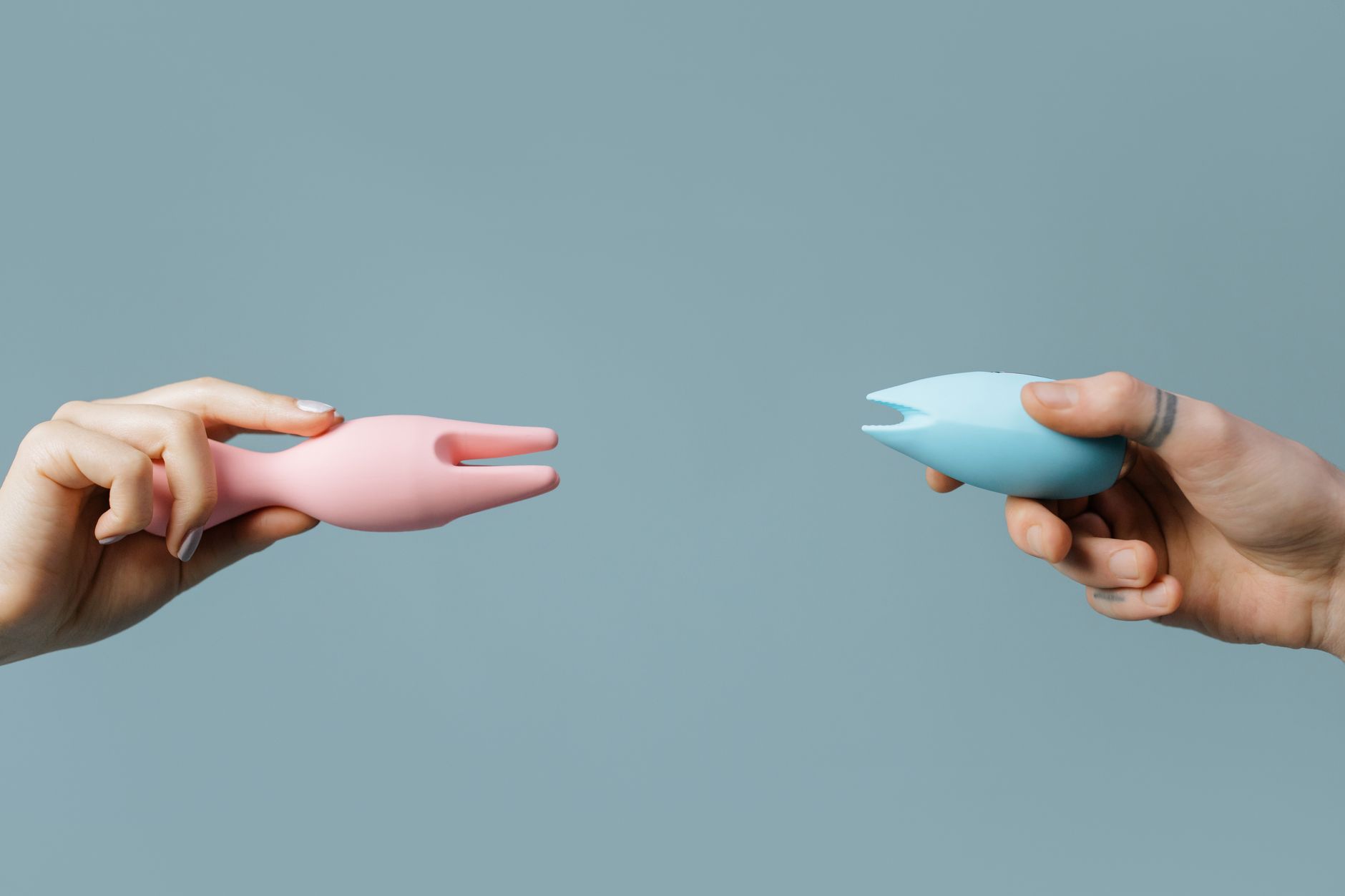
Let's talk about the libido gap
One of you wants sex twice a week. The other wants it twice a month. You're not broken, and neither is your partner. This is the most common source of tension in long-term relationships, and it almost never gets solved by having more of the thing one person wants less of.
A Lemon Vibrator doesn't fix mismatched desire. But it does change the equation in ways that most couples never consider.
Why libido mismatch feels like rejection (but isn't)
Here's the thing nobody explains clearly: when your partner has lower libido, you don't just miss sex. You miss the feeling of being wanted. You interpret their "not tonight" as "not you," and that gap between those two things is where most couples get stuck.
Your lower-libido partner isn't withholding pleasure to hurt you. They're probably exhausted, touched out, overstimulated, or just genuinely not interested in penetrative sex at that frequency. Both things are true simultaneously. Both are valid.
Instead of treating the libido gap as a problem to solve together, most couples treat it as evidence that the relationship is failing. It's not. It's evidence that you have different baseline desires, and you need a different conversation.
The mistake most couples make
They introduce a vibrator as a solution to the frequency gap. "If I use this on you, you'll want sex more often" or "If I use this on myself, maybe I'll want you less." Both of those framings guarantee the vibrator becomes another source of tension instead of pleasure.
Here's the reframe: a Lemon Vibrator is a tool for expanding what's possible between you, not a workaround for what's missing.
When your partner has lower baseline libido, they might not get aroused quickly, or they might get aroused but not want penetration, or they might want closeness without the full sexual event. A clitoral vibrator makes all three of those scenarios more satisfying and less pressured.
Starting the conversation without it feeling like a request
Timing matters. Don't bring it up mid-conflict about sex frequency or when one of you is already frustrated. Pick a totally neutral moment. You're not at the dinner table solving problems. You're in the car, or getting ready for bed on a non-sexual night, or even texting.
The opener should feel like curiosity, not pressure.
"I've been thinking about our sex life, and I don't think the problem is how often we do it. I think the problem is that when we do, it doesn't always feel good for both of us. Have you noticed that?"
Let them answer. Don't jump to the vibrator yet. You're diagnosing together, not selling them something.
If they say yes, then: "I've been reading about how clitoral vibrators actually make pleasure feel different. Not more frequent, just different. Would you be open to trying one together?"
If they say no, or they're hesitant, stop here. Don't push. You've planted the idea, and sometimes that's enough for now.
What changes when you add a Lemon Vibrator to the mix
Three specific shifts happen:
The pleasure floor rises. Your lower-libido partner might not want a full sexual encounter, but they might absolutely want 10 minutes of intense clitoral stimulation while you're kissing them. A clitoral vibrator makes that 10 minutes actually satisfying, not a quickie that leaves everyone feeling rushed.
Foreplay becomes its own event. When you're not always moving toward penetration as the "main event," foreplay stops feeling like a warm-up and starts feeling like something worth lingering in. A Lemon Vibrator makes that linger genuinely pleasurable, not performative.
Frequency pressure drops. This is counterintuitive, but it's real. When your higher-libido partner learns that they can have intense, focused pleasure without needing their partner to want the same thing at the same time, the desperation to have sex more often actually decreases. You're getting real pleasure, so the gap feels less urgent.
How to use a Lemon Vibrator when libido is mismatched
First time: set it up for success. You're both naked or partially clothed, you've got time, and you're not trying to transition to anything else. The goal is for your partner to experience what the sensation actually feels like, without pressure.
Start at the lowest setting. Have them guide where and how much pressure. This is their exploration, not your performance.
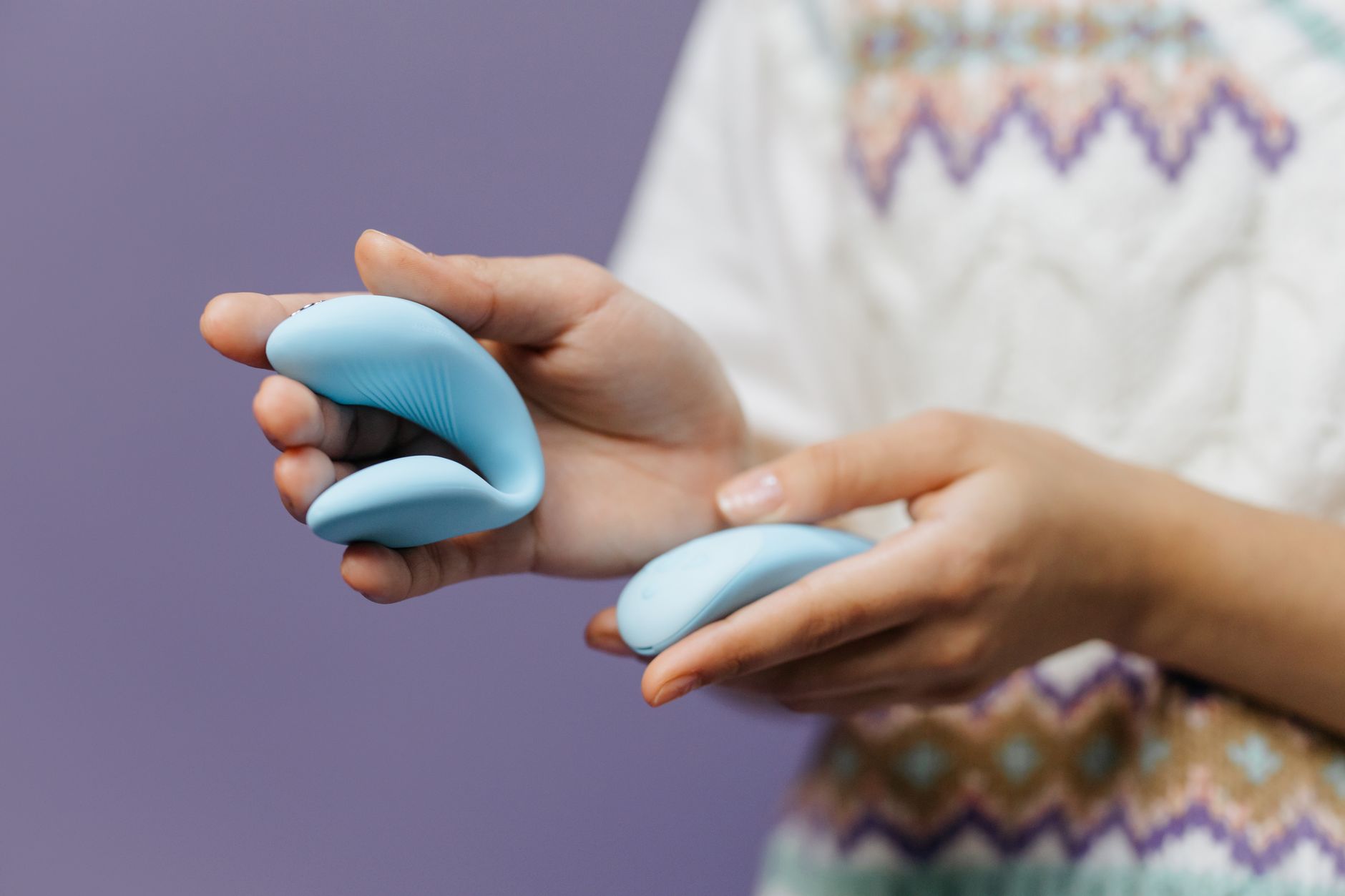
Photo by cottonbro studio on Pexels
Second and beyond: expand the context. Once they know what it feels like, you can use it during foreplay, during partnered sex if that's what's happening, or during solo sessions while they're in the room and you're connecting emotionally (yes, this counts as intimacy).
The key: nobody's performance is on the line anymore. You're both chasing sensation, not obligations.
The conversation about frequency will change
Here's what I see happen in my practice. When couples introduce a tool like a Lemon Vibrator, the conversation stops being "why don't you want sex as much as me" and becomes "what kind of pleasure do we actually want together."
Those are wildly different questions. The first is accusatory. The second is collaborative.
You might discover that your partner actually enjoys sex more often when a clitoral vibrator is involved. Or you might discover that the real issue wasn't frequency at all. It was that penetrative sex was too intense or uncomfortable for them, and they never said so because they didn't want to hurt you.
Both discoveries are gold. Both mean you're having sex that both of you actually want instead of sex that one of you is tolerating.
When your partner resists
Some people resist vibrators because they feel like criticism. "If you need a toy, I'm not enough." That's the fear talking, and it's real.
Your response: "This isn't about you not being enough. You're the person I want. This is about both of us getting to feel as good as possible together. It's an addition, not a replacement."
If they're still resistant, don't push. Resentment makes everything worse. But you can loop back to the actual issue: "I want us both to feel good. Is there something about this that feels threatening? Can we talk about that instead?"
Sometimes the resistance is really about control or fear of inadequacy. Sometimes it's about sexual trauma or past experiences they haven't told you about. Sometimes it's just that they need time. All of those are conversations worth having.
How this actually solves the libido mismatch
It doesn't solve it. That's the honest part. One of you will probably always want sex more often than the other. That's normal, and it's not a sign of incompatibility.
What changes is the shame and pressure around the difference. You're not fighting about frequency. You're playing together within whatever frequency feels sustainable for both of you.
Your lower-libido partner might start wanting sex slightly more often. Your higher-libido partner might realize they were actually chasing frequency because they were chasing validation, not just pleasure. Both things can be true.
More importantly, how you use a lemon vibrator with partners who have different sensitivity levels becomes about collaboration, not compromise. You're not meeting in the middle. You're expanding what the middle actually includes.
The real benefit: you stop resenting the gap
Libido mismatch kills more relationships through resentment than through lack of sex. The higher-libido partner feels rejected. The lower-libido partner feels pressured. Both feel alone.
A Lemon Vibrator doesn't solve that resentment directly. But it gives you a tool to have pleasure together that doesn't require you both to want the exact same thing at the exact same time.
You might find that how couples can introduce a lemon vibrator into their intimate life without shame becomes the doorway to deeper conversations about what you both actually want from sex, intimacy, and each other.
That's when the real shift happens.
FAQ: Libido mismatch and clitoral vibrators
Q: Will using a vibrator make my partner want sex more often?
A: Not necessarily, and that shouldn't be the goal. The goal is pleasure, not frequency. That said, many people discover they actually enjoy sex more often when they're not stressed about performance or when physical pleasure feels better. The frequency might naturally increase, but it shouldn't be the bargaining chip.
Q: Is it normal for partners to have different libidos?
A: Wildly normal. Most long-term couples have some libido mismatch. The range of normal female libido alone spans from asexual to multiple times daily. Add in different stress levels, health conditions, medication, and life stages, and mismatch becomes almost inevitable. It's not a red flag. It's just a variable you're working with.
Q: Should I use the vibrator on my partner if they haven't explicitly asked for it?
A: No. Enthusiastic consent is non-negotiable. Introduce the idea, give them space to say yes or no, and if they're interested, ask permission each time you use it until it becomes a comfortable part of your routine.
Q: What if my partner thinks a vibrator means I'm not satisfied with them?
A: That's a real fear, and it deserves a real conversation. Be clear: "I love you. I also want both of us to feel as good as possible. This is an addition, not a judgment." Sometimes actions matter more than words. Using the vibrator together, with focus on them, shows what you actually mean.
Q: Can a lemon vibrator help if one partner has pain during sex?
A: Potentially. Pain often kills libido, so if a clitoral vibrator offers pleasure that penetration doesn't, your lower-libido partner might actually be interested in more sex because sex feels good again. But real pain (not just discomfort) should be evaluated by a healthcare provider. How to use a lemon vibrator when recovering from pelvic pain or pelvic floor dysfunction has more specifics.
Q: What if my partner wants to use a vibrator but I'm nervous about it?
A: That nervousness is usually about fear of inadequacy or loss of control. Both are worth examining, ideally with a therapist. A vibrator doesn't replace you. It's a sensation, and you're still the person they're intimate with. You can hold the vibrator. You can ask them what feels good. You can be fully part of the experience instead of watching from the sidelines.
Mismatched libido isn't a relationship failure. It's an invitation to get more creative about what sex and intimacy actually mean to both of you. A Lemon Vibrator is just the tool that makes the conversation easier and the experience better.
If you're unsure how to start the conversation or what to say, reach out and let's talk through it.